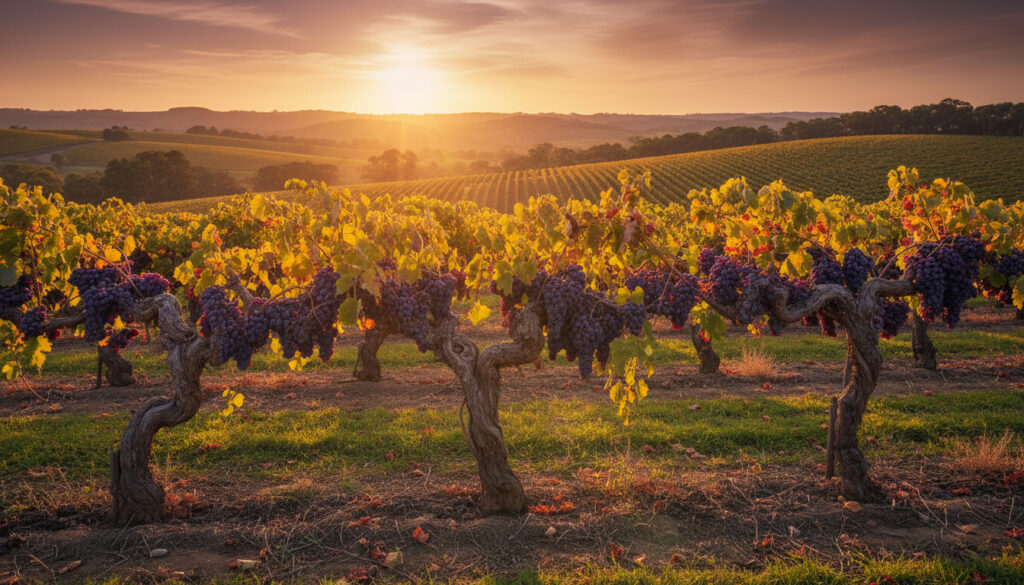
Hugh Hamilton Wines – McLaren Vale Old Vine Shiraz Legacy
Hugh Hamilton Wines stands as one of Australia’s most enduring winemaking institutions, with a continuous lineage stretching back to 1837 when Richard Hamilton arrived from England to establish South Australia’s first commercial vineyard. Today, the sixth-generation family operation concentrates its efforts in McLaren Vale, crafting site-specific Shiraz and Grenache from ancient vines that have survived nearly two centuries of viticultural evolution.
The contemporary label, led by Hugh Hamilton and his daughter Mary, represents both preservation and innovation—maintaining heritage viticulture while employing minimal-intervention techniques that highlight the distinctive terroir of their historic sites.
Where is Hugh Hamilton Wines Located and What Defines Its Terroir?
The winery operates from McLaren Vale, a region south of Adelaide renowned for ancient geological formations and maritime climate moderation. Hugh Hamilton Wines manages several distinct vineyard sites including the Cellar, Church, and Black Sheep blocks, each characterized by diverse soil profiles ranging from black cracking clay to alluvial clay and deep sand.
|
Location
McLaren Vale, South Australia
|
Heritage
Sixth-generation family operation
|
Key Sites
Cellar, Church, Black Sheep vineyards
|
Soils
Ancient clay, alluvial deposits, deep sand
|
- Family-owned continuously since 1837, making them one of Australia’s oldest winemaking families
- Old vines dating to original 1830s plantings contribute concentrated fruit and structural depth
- Minimal-intervention winemaking philosophy allows terroir expression across diverse soil types
- Black Blood Shiraz trio earned 95 points from James Halliday for demonstrating “the power of place”
- Maritime climate provides cooling influence essential for balancing McLaren Vale Shiraz ripeness
- Site-specific bottlings highlight differences between vineyard blocks separated by minimal distances
| Attribute | Details |
|---|---|
| Founding Date | 1837 (Richard Hamilton arrival), 1841 (first commercial winery) |
| Current Leadership | Hugh Hamilton (fifth generation) and Mary Hamilton (sixth generation) |
| Primary Region | McLaren Vale, South Australia |
| Vineyard Age | Old vines (100+ years, some dating to 1830s) |
| Flagship Wines | Black Blood Shiraz trio, The Black Sheep Shiraz, The Rascal Shiraz |
| Key Varietals | Shiraz, Grenache, Chardonnay, Riesling (historical) |
| Soil Types | Black cracking clay, alluvial clay, deep sand |
| Critical Recognition | 95 points James Halliday (Black Blood trio) |
| Export Markets | UK, USA, Asia |
What Are the Flagship Wines from Hugh Hamilton?
The portfolio centers on Shiraz expressions that reflect specific vineyard sites, alongside Grenache that has been part of the family’s McLaren Vale plantings since 1947.
The Black Blood Shiraz Trio
This collection represents the pinnacle of site-specific winemaking, featuring Shiraz from three distinct vineyards: Cellar, Church, and Black Sheep. Each wine expresses the ancient soils—hundreds of millions of years old—that define these blocks. James Halliday awarded all three wines 95 points, noting how each demonstrates unique terroir characteristics in aroma and flavor profile despite proximity to one another.
The Black Sheep and The Rascal Labels
The Black Sheep McLaren Vale Shiraz (2022) delivers deep inky purple color with blackberry and peppery spice notes, aged in French and American oak to balance power with elegance. Retail descriptions note its full-bodied plush fruit and smooth, lingering finish sourced from sandy and clay-loam soils.
The Rascal Shiraz (2018) presents intense, glass-staining deep ruby color with complex aromatics including red and black cherry, leather, tar, vanilla, underbrush, forest floor, and meaty notes developed through bottle aging. The palate offers plush plum, currant, pepper, and savory spice with gripping tannins, presenting a medium-full bodied wine maintained by freshness.
Grenache and Heritage Plantings
Grenache features prominently in the family’s heritage, with significant plantings established in 1947 by Burton Hamilton in McLaren Vale and Willunga. While specific contemporary tasting notes for current Grenache releases remain limited in available documentation, the varietal maintains its historical significance alongside Shiraz in the region’s viticultural pedigree.
While some retailers list an “Unplugged” Shiraz among Hugh Hamilton offerings, no direct mention of this specific label appears in verified winery communications or major wine publications. The term likely references the minimal-intervention winemaking approach evident in wines like The Black Sheep Shiraz.
Who Owns Hugh Hamilton Wines and What’s Its History?
The winery remains independently family-owned, with active involvement from the sixth generation of the Hamilton lineage.
The 1837 Foundation and Early Innovation
Richard Hamilton arrived from England in 1837 and established South Australia’s first commercial vineyard and winery by 1841 near Adelaide, founding the Hamilton Ewell Wine Company. This pioneering venture set the stage for subsequent generations to advance Australian winemaking techniques.
Generational Technical Advances
Sydney Hamilton introduced cold fermentation for table wines during the 1930s—a significant innovation for the era. Burton Hamilton expanded the family’s McLaren Vale presence in 1947, planting Shiraz, Grenache, Chardonnay, and Riesling in recognition of the region’s potential for these varieties.
Contemporary Leadership
Today, Hugh Hamilton (fifth generation) and his daughter Mary direct the operation, focusing on experimental wines from historic sites. They maintain the family’s independent ownership while navigating modern markets across the UK, USA, and Asia.
Hugh Hamilton Wines Awards and Reviews
Critical recognition has centered particularly on the Black Blood Shiraz collection, cementing the winery’s reputation for terroir-driven expression.
James Halliday Wine Companion Scores
The Black Blood Shiraz trio—representing the Cellar, Church, and Black Sheep vineyards—each received 95 points from James Halliday. The reviewer specifically praised these wines for demonstrating “the power of place,” highlighting how the ancient soils of McLaren Vale produce distinct aromatic and flavor profiles across different sites.
Trade and Consumer Reviews
Wine Enthusiast’s review of The Rascal Shiraz emphasizes its plush, fruity profile with pronounced plum, currant, vanilla, and pepper notes—a style the reviewer noted checks “South Aussie Shiraz boxes” while maintaining savory complexity and gripping tannins.
James Halliday’s 95-point ratings for the entire Black Blood trio represent rare uniformity in scoring, indicating consistent quality across all three vineyard expressions despite their distinct terroir differences.
While specific vintages like the 2018 Rascal and 2022 Black Sheep have received documented critical attention, current availability varies by market and vintage conditions. Specialized retailers occasionally offer vertical collections or bloodline sets.
How Did Six Generations of Hamiltons Build Their Winemaking Legacy?
- : Richard Hamilton arrives from England. Source: Wine Selectors
- : Establishment of South Australia’s first commercial vineyard and winery (Hamilton Ewell Wine Company) near Adelaide. Source: Wine Selectors
- : Sydney Hamilton introduces cold fermentation techniques for table wines, advancing white wine production quality. Source: Wine Selectors
- : Burton Hamilton plants Shiraz, Grenache, Chardonnay, and Riesling in McLaren Vale and Willunga, recognizing the region’s potential. Source: Wine Selectors
- : Hugh Hamilton launches the contemporary label with daughter Mary, focusing on experimental wines from historic sites. Source: Wine Companion
- : Black Blood Shiraz trio earns 95 points from James Halliday, confirming the family’s continued relevance in premium Australian wine. Source: Wine Companion
What Is Established About Hugh Hamilton Wines Versus What Remains Unclear?
| Established Facts | Remaining Questions |
|---|---|
| Family-owned continuously since 1837; sixth generation currently active | Specific sustainability certifications not detailed in available sources |
| Located in McLaren Vale with documented Cellar, Church, and Black Sheep sites | Exact production volumes for each wine remain undisclosed |
| Black Blood trio scored 95 points with James Halliday | Grenache-specific tasting notes for current releases unavailable |
| Old vines include plantings from the 1830s and 1947 | Vintage-by-vintage consistency across site-specific bottlings not fully documented |
| Minimal-intervention winemaking approach confirmed | Existence of “Unplugged” label unverified in primary sources |
How Does Hugh Hamilton Fit Into Australian Wine Heritage?
The Hamilton family represents one of the few continuous winemaking lineages in Australia spanning nearly two centuries. RACV Royal Pines Resort – Gold Coast Golf, Facilities and Booking Guide Their historical significance extends beyond longevity; the family pioneered commercial viticulture in South Australia and introduced technical innovations like cold fermentation that influenced broader industry practices.
In the contemporary context, Hugh Hamilton Wines occupies a specific niche focused on terroir transparency through old-vine material. By maintaining plantings from the 1830s and 1947 expansions, the operation preserves genetic material predating many of Australia’s current viticultural standards. This focus on heritage sites within McLaren Vale—a region itself defined by ancient geology—positions the winery as a custodian of both family and regional history.
What Do Independent Critics Say About Hugh Hamilton?
They check South Aussie Shiraz boxes with plush plum, currant, vanilla, pepper, and savory spice alongside gripping tannins.
Wine Enthusiast review of The Rascal Shiraz, via video presentation
The Black Blood Shiraz wines demonstrate the power of place… each of the three wines shows distinct differences in aroma and flavor.
James Halliday, Wine Companion
Why Seek Out Hugh Hamilton Wines?
For collectors and enthusiasts seeking authentic expressions of McLaren Vale’s ancient soils, Hugh Hamilton Wines offers rare continuity with Australia’s earliest viticultural heritage. The combination of sixth-generation family stewardship, pre-phylloxera vine material, and site-specific winemaking provides distinctiveness in a crowded market. Sheffield Shield Scores – Final Standings and Results 2024-25 Those interested can explore availability through specialized retailers carrying the Bloodline sets or individual bottlings of the Black Blood trio and Black Sheep Shiraz.
Frequently Asked Questions
Where can I purchase Hugh Hamilton Wines?
The wines are available through select Australian retailers and international distributors in the UK, USA, and Asian markets. Specialized merchants often stock the Black Blood trio and The Black Sheep labels, with some offering specific vintages online.
How old are the vines at Hugh Hamilton Wines?
Many vines date back nearly 200 years to Richard Hamilton’s original 1830s plantings, with additional significant plantings established in 1947 by Burton Hamilton in McLaren Vale and Willunga.
What distinguishes the Black Blood Shiraz trio?
The trio consists of site-specific Shiraz wines from three distinct vineyards—Cellar, Church, and Black Sheep—each expressing unique characteristics derived from different ancient soil profiles within McLaren Vale.
Does Hugh Hamilton produce certified sustainable wines?
While the winery employs minimal-intervention practices and maintains historic low-yield vines, available sources do not specify certified sustainability programs or organic designations.
What food pairs with Hugh Hamilton Shiraz?
The full-bodied Black Sheep and Black Blood Shiraz suit hearty meals, while the complex, savory notes of The Rascal complement rich dishes. Reviewers suggest these wines work well for gatherings or contemplative drinking.
What happened to the Richard Hamilton Wines label?
Richard Hamilton established the original Hamilton Ewell Wine Company in 1841. The contemporary Hugh Hamilton Wines represents the continuation of this legacy under the current fifth and sixth generation leadership.
More related posts
 news.com.au: Australia’s Leading News Site
 Dakota Tyler Biography: Age, Career, and Facts
 Craig Ferguson: Life After Late Night
 Cathay Pacific: Ownership, Rankings and Reviews 2025
 Michael Wolff: Biography, Fire and Fury, Wives, Net Worth
 Big Mac Sauce – Copycat Recipe and Ingredients Guide
 Boronia Medical Centre – Services, Billing and Contacts Guide
 Matt Smith Biography: Relationships, Health, and Career
