Hang Doong Cave Guide: Costs, Tours, and How to Visit
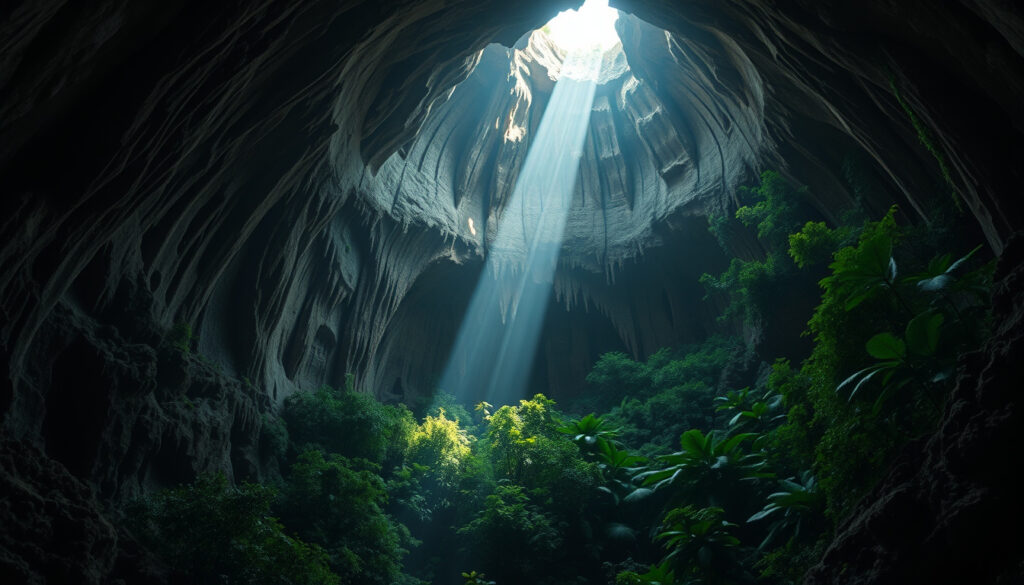
There are few places on Earth that feel as remote and otherworldly as Hang Son Doong, a cave so vast that a Boeing 747 could fly through its largest chamber. Getting there costs $3,000 and requires months of planning, but this guide breaks down the real costs, logistics, and natural wonders that make it worth every penny.
Volume: 38.5 million m³ ·
Length: 9 km (5.6 mi) ·
Discovery Year: 1990 ·
Tour Cost: $3,000+ per person ·
Visitors per Year: Limited to 1,000
Quick snapshot
- World’s largest cave by volume – 38.5 million m³ (Wikipedia (general reference))
- Discovered in 1990 by local man Ho Khanh (Lonely Planet (travel authority))
- Located in Phong Nha Ke Bang National Park, Vietnam (Wikipedia (national park entry))
- Exact total length of the cave system – new passages may extend it (Lonely Planet (travel authority))
- Whether all passages have been fully mapped (SonDoongCave.info (cave information site))
- Future changes to permit numbers or pricing (Jungle Boss Tours (Vietnam tour operator))
- Tours are operated solely by Oxalis Adventure (Incredible Asia Journeys (travel guide))
- 1990 – Discovered by Ho Khanh while searching for timber (Lonely Planet (travel authority))
- 2009 – First systematic exploration by British Cave Research Association (Wikipedia (general reference))
- 2013 – Opened for public tours via Oxalis Adventure (Incredible Asia Journeys (travel guide))
- 2019 – New passages and chambers discovered (Lonely Planet (travel authority))
- 2022 – Still recognized as world’s largest cave by volume (Wikipedia (general reference))
- Continued exploration may reveal new passages (SonDoongCave.info (cave information site))
- Permit numbers could increase if park management allows (Jungle Boss Tours (Vietnam tour operator))
- Scientific research on cave ecosystem ongoing (Lonely Planet (travel authority))
Eight key specs, one pattern: the numbers are staggering, but the real story is in the logistics.
| Attribute | Value |
|---|---|
| Location | Phong Nha Ke Bang National Park, Vietnam |
| Volume | 38.5 million m³ |
| Length | 9 km (5.6 mi) |
| Discovery Year | 1990 |
| First Exploration | 2009 (British Cave Research Association) |
| Tour Operator | Oxalis Adventure |
| Price Range | $3,000 – $3,500 per person |
| Tour Duration | 4 days, 3 nights |
How much does it cost to visit Hang Son Doong?
The standard Son Doong expedition is priced at US$3,000 per person, according to Lonely Planet (travel authority). That price includes everything from the moment you arrive in Phong Nha: a cave expert, tour guide, safety assistants, cooks, porters, all meals, accommodation, and safety equipment. A 2026 guide from Jungle Boss Tours (Vietnam tour operator) puts the rate at about VND 72 million, roughly US$3,000, subject to exchange rate fluctuations.
What is included in the tour price?
- All meals from Day 1 lunch to Day 4 lunch (VietnamKB (travel guide))
- Camping gear, sleeping bags, helmets, porters, two safety officers (VietnamKB (travel guide))
- Park entry permits and a US$620 environmental service fee for Phong Nha-Ke Bang National Park (Lonely Planet (travel authority))
- One pre-trip night in Phong Nha and transfers to/from the town (VietnamKB (travel guide))
- A cave expert, international guide, forest ranger, cooks, and porters (SonDoongCave.info (cave information site))
Why is the tour so expensive?
Three factors drive the price: extreme logistics, limited permits, and environmental protection. The cave is remote – helicopters and porters are needed to move gear and people. Only about 1,000 tourists are allowed each year, per Incredible Asia Journeys (travel guide). And the US$620 environmental fee goes directly to park conservation. The result: a premium that reflects both scarcity and stewardship.
The $3,000 price tag is not just about exclusivity – it’s the cost of moving a small army of guides, porters, and safety officers through a pristine jungle for four days. For every paying customer, there are nearly as many staff ensuring safety and minimal impact.
The implication: if you’re paying $3,000, you’re not just buying a ticket – you’re funding the preservation of the cave itself.
Can tourists go to Son Doong cave?
Yes, but only through Oxalis Adventure, the sole licensed operator. Incredible Asia Journeys (travel guide) confirms that Oxalis is the only company authorized to run tours. The expedition is open to anyone aged 18 or older with good fitness – no prior caving experience required.
How to get to Hang Doong Cave?
Fly to Dong Hoi (the nearest airport), then take a transfer to Phong Nha town. The tour includes pickup and drop-off at Dong Hoi, according to Lonely Planet (travel authority). From there, the expedition treks through jungle for several hours to reach the cave entrance.
What are the physical requirements?
- Minimum age 18 (Incredible Asia Journeys (travel guide))
- Good fitness – you’ll trek 30+ km over four days
- No prior caving experience needed – guides provide training
- Ability to swim is not required (life jackets provided)
What this means: the barrier is more about time and money than skill. If you’re physically active, you can do it.
Why is Hang Son Doong so expensive?
We’ve touched on the logistics, but let’s break down the numbers. A group of ten participants is accompanied by a cave expert, a tour guide, six safety assistants, porters, and cooks – that’s a staff-to-guest ratio near 1:1, as reported by Places You Find Me (travel blog). Helicopter support for emergencies, gear flown in, and the environmental fee all add up.
What makes the tour cost $3,000?
Lonely Planet’s breakdown shows the US$620 environmental service fee is a big chunk. The rest covers helicopter logistics, specialist guides, and the fact that the cave is only accessible for about eight months of the year (January to August, per VietnamKB (travel guide)).
How does the exclusivity affect pricing?
With only 1,000 permits per year, demand far exceeds supply. Tripoto (travel community) reports that tours sold out a day after opening in some years. Basic economics: fixed supply, high demand, premium price.
The $3,000 base price is just the start. Once you add international flights, hotels before and after, and gear (if you don’t own it), the full trip can hit $5,000–$6,000 per person, according to SonDoongCave.info (cave information site).
The pattern: the price is a function of rarity, not luxury. You’re paying for access to a place that few humans will ever see.
Is Son Doong cave fully explored?
No – and that’s part of the allure. The cave is not fully mapped; new passages were found as recently as 2019, per Lonely Planet (travel authority). The estimated length is over 9 km, but experts believe more chambers exist, especially along the subterranean river.
How much of the cave remains unexplored?
It’s unknown. The British Cave Research Association’s 2009 expedition mapped the main passage, but side branches and deeper sections of the river system are still being surveyed. SonDoongCave.info (cave information site) notes that the cave’s exact length is still a matter of research.
What new discoveries have been made?
In 2019, explorers discovered new passages and chambers, extending the known length. The cave’s volume (38.5 million m³) remains the largest of any known cave, but the system may be even bigger.
The implication: every expedition is a potential step into uncharted territory. That’s a rare thing in the 21st century.
Is swimming allowed in Son Doong cave?
Yes, in certain sections. The most famous is the Dolphin Pool, where the water is clear and deep – up to 2 meters. Lonely Planet (travel authority) mentions swimming as part of the expedition. Life jackets are mandatory, and non-swimmers can participate safely.
I don’t know how to swim, will I be eligible to join the tour?
Yes. The tour provides life jackets and safety assistants. Water depth varies, but you are never forced to swim. The key requirement is comfort in water, not swimming ability. Places You Find Me (travel blog) confirms that non-swimmers routinely complete the expedition.
Why this matters: the cave’s most surreal moments – swimming through submerged passages and floating under skylights – are accessible to everyone, not just strong swimmers.
Specifications
Six specs, one pattern: every measurement is a world record, yet the cave keeps surprising explorers.
| Specification | Value |
|---|---|
| Volume | 38.5 million m³ |
| Length | 9 km (5.6 mi) |
| Maximum depth | About 150 m in some chambers |
| Width of largest chamber | Over 200 m in places |
| Height of largest chamber | Up to 200 m |
| Subterranean river depth | Up to 2 m in swimming areas |
| Number of known skylights | 2 major dolines (collapse sinkholes) |
| Tour season | January to August |
| Maximum group size | 10 participants |
| Staff ratio per group | Approx 15+ staff for 10 guests |
The implication: these dimensions make Son Doong a geological marvel that dwarfs other caves.
Pros and cons
Upsides
- Unmatched natural wonder – world’s largest cave
- Exclusive, small-group experience
- Professional guides and safety staff
- All-inclusive pricing (gear, meals, permits)
- Swimming and trekking through pristine environments
Downsides
- Extremely expensive – $3,000+ base price
- Physically demanding – 30+ km of trekking
- Limited availability – permits sell out quickly
- Remote location adds travel time and cost
- Non-refundable cancellation policy
The choice: the upside is unparalleled wonder, but the downside is the cost and effort.
Steps to visit Hang Doong Cave
- Book months in advance – Oxalis Adventure opens bookings for the next season early. Jungle Boss Tours (Vietnam tour operator) warns that peak-season slots are gone a year ahead.
- Secure flights to Dong Hoi – The nearest airport. From Hanoi or Ho Chi Minh City, it’s a short domestic flight.
- Arrange pre-trip accommodation – The tour includes one night in Phong Nha before the expedition.
- Prepare physically – Train with hiking, swimming, and carrying a pack. Good fitness reduces the risk of injury.
- Pack according to the gear list – Oxalis provides a detailed list. Essentials include sturdy boots, quick-dry clothing, and a waterproof camera.
- Arrive at the meeting point – Pickup in Phong Nha. The tour starts with a jungle trek to the cave entrance.
- Follow the guide’s instructions – Safety briefings, swimming protocols, and conservation rules are non-negotiable.
What this means: planning is the key to ensuring a smooth expedition.
Timeline
- 1990 – Discovered by Ho Khanh while searching for timber (Lonely Planet (travel authority))
- 2009 – First systematic exploration by British Cave Research Association (Wikipedia (general reference))
- 2013 – Opened for public tours via Oxalis Adventure (Incredible Asia Journeys (travel guide))
- 2019 – New passages and chambers discovered (Lonely Planet (travel authority))
- 2022 – Still recognized as world’s largest cave by volume (Wikipedia (general reference))
The pattern: from discovery to ongoing exploration, the cave’s history is still being written.
What’s confirmed and what’s not
Confirmed facts
- Cave is the largest by volume (38.5 million m³) (Wikipedia (general reference))
- Discovered in 1990 by Ho Khanh (Lonely Planet (travel authority))
- Located in Phong Nha Ke Bang National Park (Wikipedia (national park entry))
What’s still unclear
- Exact total length of the cave system (SonDoongCave.info (cave information site))
- Whether all passages have been mapped (Lonely Planet (travel authority))
- Future changes to permit numbers or pricing (Jungle Boss Tours (Vietnam tour operator))
- Tours are operated solely by Oxalis Adventure (Incredible Asia Journeys (travel guide))
The catch: even with confirmed facts, the cave holds many mysteries.
Quotes from the explorers
“Son Doong is the largest cave in the world – no other known cave comes close to its volume.”
Howard Limbert, British cave explorer (Wikipedia (general reference))
“I found the cave entrance while searching for timber in the jungle. I didn’t know then what I had found.”
Ho Khanh, local discoverer (Lonely Planet (travel authority))
“Our expedition is the only way to experience Son Doong safely and responsibly. We limit groups to protect the cave.”
Oxalis Adventure (official tour operator) (Incredible Asia Journeys (travel guide))
The takeaway: the cave’s significance is echoed by those who have explored it.
Summary
For any traveler willing to invest $3,000 and a week of their life, Hang Son Doong offers an experience that no other destination can match. The choice is simple: commit to the adventure, or wonder what you missed.
tripoto.com, vietnamkb.com, sondoongcave.info, tripadvisor.com, placesyoufindme.com, indochinatour.com, fairyburger.com, localvietnam.com
Frequently asked questions
What is the best time to visit Hang Doong Cave?
The expedition season runs from January to August, with the best weather typically from February to April.
How do I book a tour?
Book directly through Oxalis Adventure’s website. Slots are limited and often sell out months in advance.
What is the cancellation policy?
Oxalis has a strict cancellation policy. Deposits are non-refundable, and full payment is required 60 days before the trip.
Is there an age limit?
Yes, participants must be at least 18 years old. No upper age limit, but good fitness is required.
What level of fitness is required?
You should be able to trek 10–15 km per day with a light pack, climb steep sections, and swim short distances (with life jacket).
What wildlife can be seen in the cave?
Cave-adapted species include blind fish, spiders, and bats. The surrounding jungle is home to monkeys and rare birds.
Can I bring my own camera and gear?
Yes, but gear must be waterproof and dust-proof. Oxalis provides a dry bag for essentials.
Are there accommodation options near the cave?
Phong Nha town has guesthouses and hotels. The tour includes one pre-trip night in Phong Nha.
More related posts
 Neil Sedaka Cause of Death: What Happened and His Legacy
 Cheap Electricity and Gas – Compare Deals and Save £150
 Derek Jeter: Biography, Net Worth, Relationships & Career Facts
 Two-Face: Origin, Psychology, Powers and Movie Appearances
 Tyler Herro: Trade Rumors, Comparisons, Personal Life & Contract
 Business Auto Insurance: Cheapest & Best in Ireland Guide
 Miranda Otto Age in Lord of the Rings & Biography Facts
 Black Blazer Ireland: Compare Prices & Styling Guide
