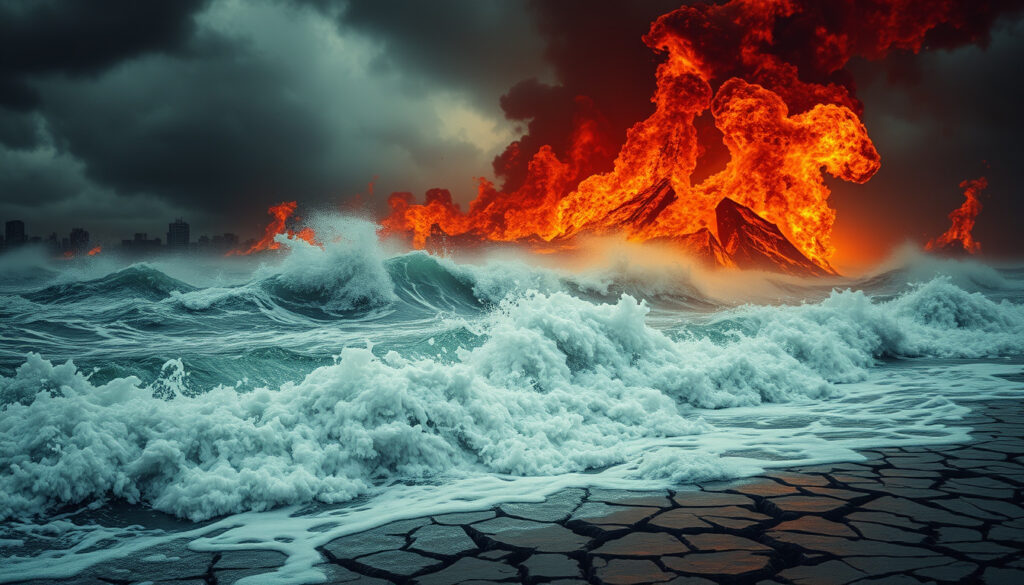
Hell or High Water – Meaning, Origins & Movie Guide
The phrase “hell or high water” carries significant weight in American English, representing an unwavering commitment to overcoming obstacles. The same words also title a critically acclaimed 2016 film that brought renewed attention to both the idiom and the modern Western genre. This guide explores the meaning, origins, and cultural resonance of the phrase alongside details of the David Mackenzie film that shares its name.
Whether encountered in conversation, literature, or cinema, the expression conveys determination in the face of adversity. Understanding its background provides insight into why the phrase has endured for more than a century and how it found new life in contemporary storytelling.
This article examines the idiom’s definition and historical roots, breaks down the plot and themes of the film, and separates verified facts from areas where uncertainty remains among scholars and critics.
What Does “Hell or High Water” Mean?
The idiom “hell or high water” describes a situation where someone is resolved to accomplish something regardless of the difficulties or consequences that may arise. It signals extreme determination and a willingness to push forward no matter what challenges appear.
When used in speech, the phrase typically appears as “come hell or high water,” meaning that success will be achieved despite any obstacle. Dictionaries including Merriam-Webster define it as “regardless of any difficulty, problem, or situation.” The expression emphasizes resilience and an almost stubborn refusal to be deterred.
The phrase functions as an emphatic declaration of resolve. Writers and speakers employ it to convey that external circumstances will not alter the intended outcome. It appears in political speeches, everyday conversation, and creative works as a marker of unshakeable purpose.
Using the Phrase in Context
Idioms gain meaning through application. The phrase can be woven into sentences that demonstrate both its literal and figurative weight. Examples include:
- “Come hell or high water, we will finish this project on time.”
- “She was determined to reach her family, come hell or high water.”
- “The team promised to deliver the proposal, hell or high water.”
These usages share a common thread: they express that the speaker will not be swayed by hardship or opposition. The strength of the phrase lies in its vivid imagery of two forces—chaos and natural disaster—being overcome by sheer will.
While “come hell or high water” is the most common form, variations exist including “whether hell or high water comes” and “despite the onset of hell or high water.” The core meaning remains consistent across these forms.
Key Insights
- The phrase emphasizes unbreakable commitment to a stated goal or promise.
- The 2016 film revitalized interest in the modern Western genre while bringing the idiom to new audiences.
- The movie is not based on specific true events but draws inspiration from the real economic struggles of rural Texas communities.
- Jeff Bridges received critical acclaim and an Academy Award nomination for his portrayal of Texas Ranger Marcus Hamilton.
- The expression connects to broader themes of American resilience found in frontier narratives.
- Dictionary sources consistently define the phrase as meaning “regardless of difficulties” without significant variation.
- The film’s ending reinforces the phrase’s meaning through the protagonist’s actions and choices.
| Attribute | Detail |
|---|---|
| Core Meaning | Regardless of difficulties or obstacles |
| First Recorded Use | Approximately 1910s United States |
| Film Release Year | 2016 |
| Director | David Mackenzie |
| Runtime | 102 minutes |
| Rotten Tomatoes Score | 97% (critics) |
| Academy Award Nominations | Six in 2017 |
| Primary Cast | Chris Pine, Jeff Bridges, Ben Foster |
What Is the Origin of the Phrase “Hell or High Water”?
The origins of “hell or high water” trace to 19th-century America, likely emerging among pioneers and frontier communities who faced harsh and unpredictable conditions. The expression draws on imagery of two formidable forces—chaos represented by “hell” and natural disaster symbolized by “high water”—as metaphors for insurmountable obstacles.
Scholars point to the earliest known printed reference appearing in May 1882, within The Burlington Weekly Hawk Eye, an Iowa newspaper. The publication described “hell and high water” as an “old saying,” suggesting the phrase had circulated orally for some time before being committed to print.
Linguistic Influences
Several possible influences have been identified by etymologists studying the phrase’s development. The alliterative quality of “hell and high water” may have contributed to its memorability and spread, a technique common in folk expressions of the era.
Biblical references have also been proposed as influences. Isaiah 43:2 describes passing “through the water” and “through the fire,” imagery that shares thematic resonance with the idiom’s promise to endure adversity. Additionally, sailor phrases such as “between the devil and the deep blue sea” employ similar binary extreme scenarios.
The word “hell” derives from Old English helle, meaning a hidden or covered place after death, originating from Proto-Indo-European kel- (to cover or hide). While the etymology is unrelated to the idiom’s meaning, it reflects the deep roots of the language used in the expression.
Evolution Through the 20th Century
Following its frontier emergence, the phrase gained wider circulation during the mid-20th century. Wartime speeches and popular media helped spread its usage beyond regional American contexts. By the late 20th century, “hell or high water” had become a recognized idiom in international English.
The expression’s durability stems from its vivid imagery and universal applicability. People facing challenges in any domain can invoke the phrase to signal determination. Sources including Grammarist and Grammar Phobia document its gradual integration into standard English.
What Is the Hell or High Water Movie About?
Hell or High Water (2016) is a neo-Western crime drama directed by David Mackenzie. The film follows brothers Toby and Tanner Hanna as they embark on a series of bank robberies across West Texas. Their motivation is deeply personal: they need to save their family ranch from foreclosure during the aftermath of the 2008 financial crisis.
Chris Pine portrays Toby Hanna, the more restrained and calculating brother driven by family obligation. Ben Foster plays Tanner, the volatile sibling whose impulsive nature drives much of the film’s tension. Together, they target branches of the same bank that threatened their livelihood.
Plot Structure
The narrative unfolds as a cat-and-mouse thriller. Jeff Bridges stars as Marcus Hamilton, a Texas Ranger in his final cases before retirement. Partnered with Alberto Parker, a Comanche ranger played by Gil Birmingham, Hamilton pursues the Hanna brothers with growing respect mixed with professional duty.
The brothers’ robbery spree is methodical rather than violent. They target mortgage-related loans, taking only small amounts to avoid attention while inflicting maximum damage on the institutional lender. This approach reflects Taylor Sheridan’s screenplay, which critics have praised for its sharp character work and social commentary.
The Ending Explained
The film’s conclusion delivers on the promise embedded in its title. Toby successfully completes most of his robberies, paying off the ranch debt and sending money to his ex-wife and young son. However, Tanner’s betrayal forces Toby to kill his own brother in a tragic confrontation.
Following the fatal confrontation, Toby surrenders to Hamilton. The ranger, having witnessed Toby’s resolve and understanding his motivations, helps him avoid the full charges he faces. The ending honors the phrase “come hell or high water”—Toby fulfilled his commitment to his family despite devastating costs.
The film’s ending reinforces the idiom’s meaning through action rather than dialogue. Toby’s willingness to sacrifice everything for his family mirrors the phrase’s core assertion: certain commitments override all other considerations.
Is Hell or High Water Based on a True Story?
The film is not based on any specific true story or real individuals. According to available sources, screenwriter Taylor Sheridan created the fictional characters and plot while drawing inspiration from the broader economic hardships affecting rural America during the financial crisis of 2008.
Sheridan has cited the real struggles of Texas communities facing predatory lending and foreclosure as thematic influences. The film fictionalizes these events through the Hanna brothers’ story, but no direct real-world counterpart to the characters or their crimes has been identified.
Distinguishing Fact from Fiction
For viewers wondering whether the events depicted actually occurred, the clear answer is no. The plot, characters, and specific incidents are products of Sheridan’s imagination. The setting, social context, and emotional authenticity stem from careful research into rural American economic conditions rather than documented events.
This approach is typical of Sheridan’s work, which often explores themes of crime, justice, and survival in peripheral American settings. Films like Sicario and Wind River similarly blend fictional narratives with authentic social settings.
Who Stars in Hell or High Water?
The film features an ensemble cast anchored by acclaimed performances from Chris Pine and Jeff Bridges. Supporting roles include Ben Foster as the troubled Tanner Hanna and Gil Birmingham as the philosophical Ranger Alberto Parker.
Principal Cast
| Actor | Role |
|---|---|
| Chris Pine | Toby Hanna |
| Jeff Bridges | Marcus Hamilton |
| Ben Foster | Tanner Hanna |
| Gil Birmingham | Alberto Parker |
| Katy Mixon | Supporting cast member |
Director and Creative Team
David Mackenzie directed the film, bringing a taut, controlled aesthetic to the dusty Texas landscapes. Taylor Sheridan’s screenplay received significant recognition, earning an Academy Award nomination for Best Original Screenplay. The Wikipedia article on the film provides comprehensive details on production and cast.
Academy Awards Recognition
The film received six nominations at the 2017 Academy Awards ceremony. Jeff Bridges earned a nod for Best Supporting Actor, while Gil Birmingham was recognized in the same category. The nominations for Best Picture and Best Original Screenplay reflected the industry’s appreciation for the film’s craft and narrative ambition.
Although Hell or High Water did not win any Oscars that year, it captured other honors. The National Board of Review named it Best Film of 2016, and Jeff Bridges received the Best Supporting Actor award from that organization.
Ratings and Critical Reception
Critical response to the film was overwhelmingly positive. It holds a 97% approval rating on Rotten Tomatoes based on critic reviews, with an average score of 85 out of 100 on Metacritic. IMDb users have rated it 8.4 out of 10 from more than 340,000 votes.
Critics praised the film’s gritty realism, strong performances, and sharp screenplay. Many reviewers drew comparisons to No Country for Old Men, noting Sheridan’s continuation of the modern Western tradition. The official Oscars website confirms the six nominations received.
As of 2024, the film is available for streaming on Paramount+ in the United States. Digital rental and purchase options exist through Prime Video and Apple TV, though availability varies by region.
Key Moments in “Hell or High Water” History
The phrase and film have distinct but intersecting timelines. Below is a chronological overview of significant moments in their respective histories.
- 1910s: Early printed uses of the phrase appear in United States newspapers, establishing it as recognizable American idiom.
- 1940s: The expression gains broader circulation through wartime rhetoric and popular media.
- 2013: Screenwriter Taylor Sheridan completes the script for Hell or High Water.
- 2016: The film premieres at festivals and receives theatrical release, generating critical excitement.
- 2017: Six Academy Award nominations recognize the film’s achievements.
- 2024: The film continues streaming on multiple platforms, maintaining audience interest.
This timeline illustrates how a phrase born in frontier America found contemporary resonance through cinematic storytelling. The 2016 film did not invent the idiom’s meaning but rather reintroduced it to audiences who may have encountered it only in conversation.
What We Know and What Remains Uncertain
When examining both the phrase and the film, some information is well-established while other aspects remain debated or undocumented.
| Established Facts | Uncertainties |
|---|---|
| The idiom means determination despite adversity, according to dictionary consensus. | The exact origin date: oral circulation likely preceded the 1882 printed reference. |
| The film’s plot depicts fictional brothers robbing banks to save their ranch. | Specific real-life inspirations for the film’s characters and events. |
| The 2016 release and cast are verified public record. | Whether sequels will ever materialize remains speculative as of 2026. |
| Six Academy Award nominations were received in 2017. | The precise cultural impact on modern idiom usage has not been formally studied. |
These distinctions matter for accurate reporting. Readers benefit from understanding what sources confirm versus what remains interpretive or speculative.
Cultural Significance
The phrase “hell or high water” has embedded itself in American cultural narratives about resilience, determination, and frontier survival. Its imagery resonates with stories of settlers overcoming harsh conditions, workers facing economic hardship, and families protecting their livelihoods against institutional forces.
The 2016 film contributed to a revival of the Western genre in contemporary cinema. By setting familiar themes within the 2008 financial crisis, Sheridan updated the genre’s concerns while maintaining its visual and moral vocabulary. Critics noted the film’s commentary on economic inequality and rural decline.
For those interested in similar thematic explorations, the article One Battle After Another Reviews – Critic Consensus and Key Insights examines other works addressing American adversity and perseverance.
Idiom in Modern Usage
The phrase continues to appear in political speech, business communication, and everyday conversation. Its dramatic quality makes it effective for emphasizing commitment to difficult goals. The expression’s durability suggests it addresses enduring human concerns rather than passing trends.
Media coverage frequently employs the idiom when describing determined efforts against odds. This usage maintains the phrase’s original meaning while adapting it to contemporary contexts.
What Experts Say
Dictionary definitions and etymological research provide the most reliable expert perspectives on the phrase. According to Phrases.org.uk, the expression has maintained consistent meaning throughout its documented history.
“The phrase ‘come hell or high water’ asserts that nothing will prevent someone from doing what they have promised or decided to do. It emphasizes an unshakeable commitment.”
— Merriam-Webster Dictionary definition
“A gripping modern Western that uses the idiom’s themes of determination and sacrifice to explore economic desperation in rural America.”
— Critical consensus on Hell or High Water
These perspectives confirm the phrase’s meaning while highlighting how the film engages with its thematic core. The intersection of linguistic heritage and cinematic interpretation demonstrates how idioms can carry narrative weight across media.
Final Takeaways
The phrase “hell or high water” represents one of American English’s most vivid expressions of determination. Its origins in 19th-century frontier experience gave it imagery that has resonated across more than a century of use. The 2016 film Hell or High Water brought renewed attention to both the idiom and the modern Western genre.
For readers interested in film explorations of determination and sacrifice, our Avengers: Endgame – Plot, Cast, Streaming and Box Office Guide examines another work featuring characters committed to impossible goals.
Whether encountered in speech or on screen, “hell or high water” communicates an unambiguous message: some commitments transcend difficulty. That enduring clarity explains why the phrase has remained part of everyday English for generations.
Frequently Asked Questions
Are there lyrics for “Hell or High Water”?
No lyrics are associated with the idiom or the film title. The phrase appears as dialogue within the film, emphasizing a character’s determination rather than functioning as a song.
Is there a Hell or High Water sequel?
No sequel exists as of 2026. Screenwriter Taylor Sheridan has discussed possibilities in interviews, but no official production has been announced.
Where can I stream Hell or High Water?
In the United States, the film is available on Paramount+. Digital rental and purchase options include Prime Video and Apple TV, with regional availability varying outside the US.
What does “come hell or high water” mean?
The phrase means that someone will accomplish their goal regardless of obstacles or difficulties. It signals extreme determination and resolve.
Is the Hell or High Water movie based on a true story?
The film is not based on specific true events. While inspired by real economic struggles in rural America during the 2008 financial crisis, all characters and plot elements are fictional.
Did Jeff Bridges win an Oscar for Hell or High Water?
Jeff Bridges was nominated for Best Supporting Actor at the 2017 Academy Awards but did not win. He received other awards, including Best Supporting Actor from the National Board of Review.
What is the origin of the phrase “hell or high water”?
The phrase emerged in 19th-century America, likely among frontier communities. The earliest printed reference appears in an 1882 Iowa newspaper, though oral circulation probably predates this.
More related posts
 ABC News Adelaide: Your Guide to Verified Local News
 Vera Blue: Celia Pavey’s Real Name, The Voice, and Illness Story
 Arthur Jones Death: What We Know About the NFL Star’s Sudden Passing
 Cheap Electricity and Gas – Compare Deals and Save £150
 Wolfgang Amadeus Mozart: Facts, Myths, Life & Legacy
 Pirate Software: Real Name, Voice, and Drama
 Richard Madden: Biography, Partner, Height, Movies & TV Shows
