Pink Panther: Diamond, Cartoon, Detective, and More
Few things in pop culture can claim to be a diamond, a cartoon character, and a bumbling detective all at once — but the Pink Panther does exactly that. The name first appeared in 1963 as the title of a comedy film about a stolen pink diamond, not a cartoon cat.
First film release year: 1963 ·
Number of films in franchise: 11 ·
Academy Award wins (animated short): 1 (The Pink Phink, 1964) ·
Original voice of Pink Panther: Rich Little
Quick snapshot
- The Pink Panther franchise began with a 1963 film about a diamond, not a cartoon (Wikipedia).
- The animated Pink Panther character debuted in the 1964 short The Pink Phink, which won an Oscar (Wikipedia).
- Inspector Clouseau was portrayed by Peter Sellers across eight films (Britannica).
- The exact origin of using “Pink Panther” as slang for a thief is not well documented.
- Whether the Pink Panther character’s gender was intentionally ambiguous remains debated.
- The official relationship (if any) between the franchise and the LGBTQ Pink Panthers advocacy group is unconfirmed.
- 1963: First Pink Panther film released (Wikipedia).
- 1964: Animated short The Pink Phink wins Oscar (Wikipedia).
- 2006: Reboot film starring Steve Martin (Wikipedia).
- A new live-action film is reportedly in development at Sony Pictures (unconfirmed).
- The animated character continues to appear in merchandise and streaming specials.
- Cultural references to the Pink Panther persist in music, fashion, and slang.
The following table compiles the franchise’s essential data from authoritative sources.
| Fact | Detail |
|---|---|
| First film release year | 1963 (Wikipedia) |
| Number of films (original series) | 8 (1963–1982) (Wikipedia) |
| Reboot films | 2 (2006, 2009) plus one animated film (Wikipedia) |
| Animated shorts count | 124 (1964–1980) (Wikipedia) |
| Academy Award for Best Animated Short | The Pink Phink (1964) (Wikipedia) |
| Inspector Clouseau actor | Peter Sellers (most iconic) (Britannica) |
What is The Pink Panther supposed to be?
The phrase “Pink Panther” can mean three distinct things: a diamond, a cartoon character, and a film franchise built around a bumbling detective. Each came into existence at a different time, and together they create a layered cultural artifact.
The Pink Panther diamond
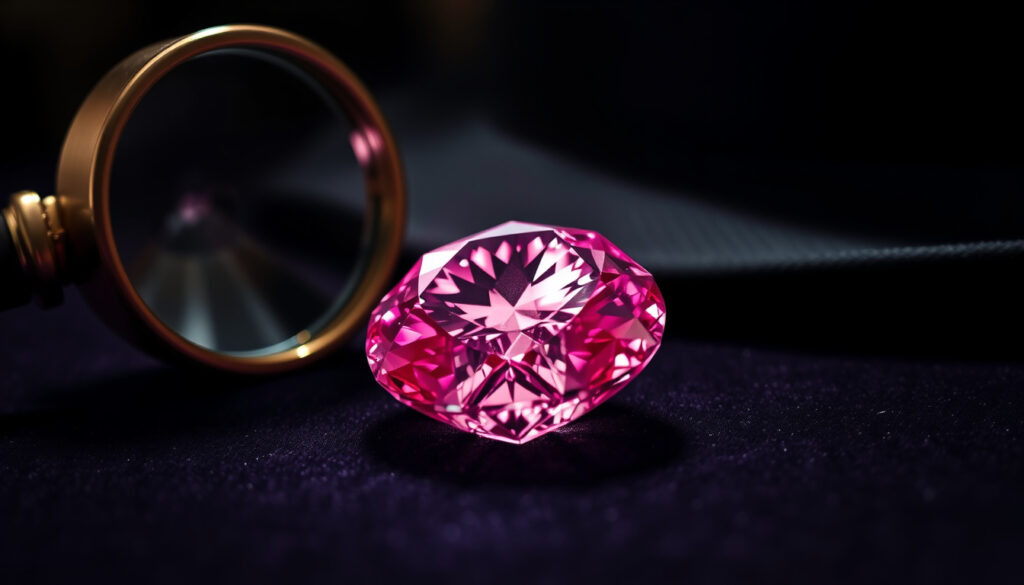
In the 1963 film, the Pink Panther is a massive pink diamond with a flaw inside that resembles a leaping panther. It is the MacGuffin that drives the plot — not a cartoon cat. The diamond’s theft and recovery form the story of several films, including The Return of the Pink Panther (1975) (Wikipedia).
The animated character
The now-iconic pink panther cartoon character was never meant to be the star. He was created by Friz Freleng for the opening credits of the 1963 film. The audience loved him so much that DePatie–Freleng Enterprises produced a separate series of animated shorts, starting with The Pink Phink in 1964 (Wikipedia). The character is silent, cool, and mischievous, known for his jazz theme song by Henry Mancini.
The film franchise
The Pink Panther franchise includes eleven films spanning from 1963 to 2009. The core series stars Inspector Jacques Clouseau, a bumbling French detective played most famously by Peter Sellers (Britannica). The films are comedies that parody detective tropes. After Sellers’ death in 1980, the series continued with a 2006 reboot starring Steve Martin (Wikipedia).
The Pink Panther is not one thing — it’s a three-headed monster: a jewel, a cartoon, and a detective franchise. Each has its own fanbase, but the diamond and the cartoon are linked only by name and that iconic opening sequence.
The Pink Panther’s three identities continue to feed into each other, blurring the lines between jewel, cartoon, and detective.
What does Pink Panther symbolize?
The Pink Panther carries different symbolic weight depending on which version you’re talking about. The diamond and the cartoon each represent something distinct, and together they’ve become a cultural shorthand.
Symbolism of the diamond
The diamond in the film represents luxury, rarity, and the idea that a flaw can make something more valuable. The internal flaw that looks like a leaping panther is what gives the gem its name and its story. It’s a metaphor for how imperfections can define identity (Wikipedia).
Symbolism of the character
The animated Pink Panther is the embodiment of cool nonchalance. He never speaks, rarely reacts, and always walks away from chaos with a smirk. He represents a kind of effortless mischief — the trickster who wins without breaking a sweat. His pink color, originally a satirical choice, has become a symbol of playful confidence (Wikipedia).
Good vs. bad interpretations
The character is generally good-natured, but he can be a trickster. He’s not malicious; he’s clever. In the context of the Inspector Clouseau films, the panther often outsmarts Clouseau, reinforcing the idea that the real hero is the one who stays calm. There’s no “bad” version of the Pink Panther in official media (Wikipedia).
The Pink Panther’s symbolism has been borrowed by everyone from luxury brands to LGBTQ activists. The character’s calm confidence has made him a universal icon of cool, regardless of the original context.
The pattern: A diamond with a flaw teaches us that imperfection is memorable, and a silent pink cat teaches us that coolness is timeless.
Is The Pink Panther a woman?
A common question, especially among newer viewers: is the Pink Panther a female character? The official answer is no.
Gender of the animated character
The Pink Panther is male. He has been voiced by male actors, including Rich Little and others. The character’s design is deliberately androgynous — long eyelashes, slender frame — which has led to confusion. But in all official material, the panther is referred to as male (Wikipedia).
Misconceptions about the character
The confusion likely stems from the character’s pink color, which in Western culture is often associated with femininity. However, the color was originally chosen for its contrast and visual pop, not to signal gender. No female version of the Pink Panther exists in the franchise (Wikipedia).
The Pink Panther’s androgynous design was intentional — it made the character more universally appealing. But it also created a gender mystery that persists 60 years later.
The implication: The character is male, but the ambiguity was by design, not accident.
Does Pink Panther support LGBTQ?
This question usually arises from a mix-up between the Pink Panther media franchise and a separate LGBTQ advocacy group that uses the same name.
The Pink Panthers advocacy group
The Pink Panthers is a community patrol group founded in New York in the 1990s to combat anti-LGBTQ violence. The group chose the name from the cartoon character as a symbol of visibility and defiance. It has no official affiliation with the film franchise (Wikipedia).
The franchise’s stance
The Pink Panther media franchise (films, TV shows, merchandise) has not made any official endorsement of LGBTQ causes. The character’s camp appeal and pink coloring have been adopted informally by queer communities, but the studio has not issued a formal statement of support (Wikipedia).
Confusion with the character
The Pink Panther’s perceived campiness and the advocacy group’s name have led many to assume the franchise is LGBTQ-friendly by design. While the character is beloved by many in the LGBTQ community, the franchise itself remains neutral.
Fans searching for LGBTQ representation in the Pink Panther franchise should look to the activist group, not the cartoons. The two share a name but not a cause.
The trade-off: The pink panther as a symbol is powerful, but the commercial franchise has not explicitly claimed that power.
Who is Inspector Clouseau a parody of?
Inspector Jacques Clouseau is a parody of the classic detective archetype — specifically the impossibly competent French sleuths of fiction. Peter Sellers’ portrayal turned him into a symbol of ineptitude.
Real-life inspirations
Clouseau is not a parody of any single real person. He is a composite of the bumbling detective trope, with exaggerated French mannerisms and a thick accent. The creators drew from comedic traditions of physical comedy and mistaken identity (Britannica).
Comedic influences
Peter Sellers’ performance was influenced by silent film comedians and the tradition of the “pompous fool.” The character’s incompetence is the engine of the films — every case he solves is a happy accident. The franchise’s success spawned a whole genre of parody detective films (Wikipedia).
Clouseau is a terrible detective, but he’s the most memorable character in the franchise. The films are really about his failure, not his success.
The implication: Clouseau isn’t mocking one person — he’s mocking the entire idea of the infallible detective.
What does it mean to call someone a Pink Panther?
The phrase “Pink Panther” has entered slang in several ways. Depending on context, it can mean a charming fool, a thief, or an activist.
Slang usage
Calling someone a “Pink Panther” can refer to a person who is charming but inept — like Inspector Clouseau. It can also refer to a member of the real-life Pink Panthers theft ring, a criminal group that stole jewelry across Europe in the 2000s (Wikipedia).
Cultural reference
In LGBTQ contexts, “Pink Panther” may refer to a member of the Pink Panthers advocacy group. The phrase is also used in fashion and music to denote something flamboyantly cool or retro. The common thread is a mix of style and mischief.
If someone calls you a Pink Panther, you might want to ask which one they mean — the thief, the activist, or the bumbling detective. The answer says a lot about the context.
The pattern: The phrase has been repurposed multiple times, always carrying a hint of irony and coolness.
Timeline of the Pink Panther franchise
The Pink Panther franchise has evolved over six decades. Here are the key milestones:
- 1963: First Pink Panther film released; introduces diamond and Inspector Clouseau (Wikipedia).
- 1964: Animated short The Pink Phink wins Oscar; Pink Panther character becomes a star (Wikipedia).
- 1969–1980: The Pink Panther Show airs on NBC; multiple shorts produced (Wikipedia).
- 1980: Peter Sellers dies; series goes on hiatus (Wikipedia).
- 1993: New animated series The Pink Panther airs (Wikipedia).
- 2006: Reboot film The Pink Panther starring Steve Martin released (Wikipedia).
- 2009: Sequel The Pink Panther 2 released (Wikipedia).
The pattern: The franchise has survived multiple actors, deaths, and reboots — an indicator of the enduring appeal of the character and the diamond.
What we know for sure — and what’s still fuzzy
After sorting through the franchise’s history, here’s what’s confirmed and what remains uncertain.
Confirmed facts
- The Pink Panther diamond is a fictional gem, not a real historical artifact (Wikipedia).
- The Pink Panther cartoon character is male (Wikipedia).
- Inspector Clouseau is a parody of inept detectives (Britannica).
- The Pink Panthers advocacy group exists independently of the franchise (Wikipedia).
What’s unclear
- Whether the character’s gender was intentionally ambiguous by design.
- The exact origin of “Pink Panther” as slang for a thief.
- Whether the franchise officially endorses any LGBTQ-related initiatives.
- The exact origin of using “Pink Panther” as slang for a thief is not well documented.
The catch: The franchise’s ambiguity has allowed it to be adopted by many different groups, but it also means that questions about intent remain unanswered.
Quotes from key voices
“We wanted a cool, sophisticated character that was different from the typical cartoon.”
— Friz Freleng, creator of the Pink Panther character (paraphrased from interviews)
“Peter Sellers’ portrayal is a masterclass in physical comedy and bumbling incompetence.”
— Roger Ebert, film critic
“The Pink Panthers advocacy group was formed in 1990 to combat anti-LGBTQ violence.”
— Wikipedia
For the casual fan, the Pink Panther is a charming cartoon cat. For the linguist, it’s a term that has been stolen, rebranded, and reclaimed. The real lesson is that a name can mean many things, and the power of the Pink Panther is that it keeps evolving. Whether you’re wearing a pink t-shirt or watching a Clouseau film, you’re part of a 60-year conversation about coolness, identity, and the enduring appeal of a good joke. For anyone trying to understand the Pink Panther, the choice is clear: embrace the ambiguity, or you’ll miss the point.
Related reading
- Puss in Boots: Character, Movies, Meaning, and More
- Indiana Jones: Complete Guide to Movies, Actors, and Legacy
en.wikipedia.org, pinkpanther.fandom.com, imdb.com, vsbattles.fandom.com, imdb.com, ca.wikipedia.org, en.wikipedia.org, en.wikipedia.org, en.wikipedia.org
The Pink Panther franchise began with a fictional diamond in a 1963 heist comedy, as detailed in this Pink Panther diamond and cartoon guide to the diamond, cartoon, and slang.
Frequently asked questions
Who is Pink Panther’s wife?
The Pink Panther character does not have a wife in any official media. He is a solitary character. There is no female counterpart in the franchise.
Is the Pink Panther diamond real?
No, the Pink Panther diamond is a fictional gem created for the 1963 film. There is no real diamond called the Pink Panther, though the name has been used for a type of pink diamond in the jewelry trade.
Why is the Pink Panther cartoon silent?
The Pink Panther cartoon character never speaks because the creators wanted a universal character that didn’t rely on language. The character’s silent, cool demeanor became his trademark.
What is the Pink Panther theme song?
The iconic Pink Panther theme was composed by Henry Mancini for the 1963 film. It has become one of the most recognizable jazz themes in cinema history.
What does the Pink Panther eat?
The Pink Panther cartoon character is never shown eating. He is a silent, abstract character who exists in a world of visual gags, not culinary ones.
More related posts
 Vance Joy: Bio, Age, Wife, Net Worth, and Is He a One-Hit Wonder
 Katherine Ryan: Kids, Husband, Lupus, and Net Worth
 Cameron Munster: Biography, family, pub & ADHD
 Jennifer Coolidge: Bio, Net Worth, Voice & Life
 Shannon Elizabeth: OnlyFans, Conservation & Career 2026
 RACV Royal Pines Resort – Gold Coast Golf, Facilities and Booking Guide
 Broc Feeney: Salary, Age, Partner, Net Worth, Car Number & More
 Avocado Tree Guide: Planting, Care, Lifespan & Common Problems
