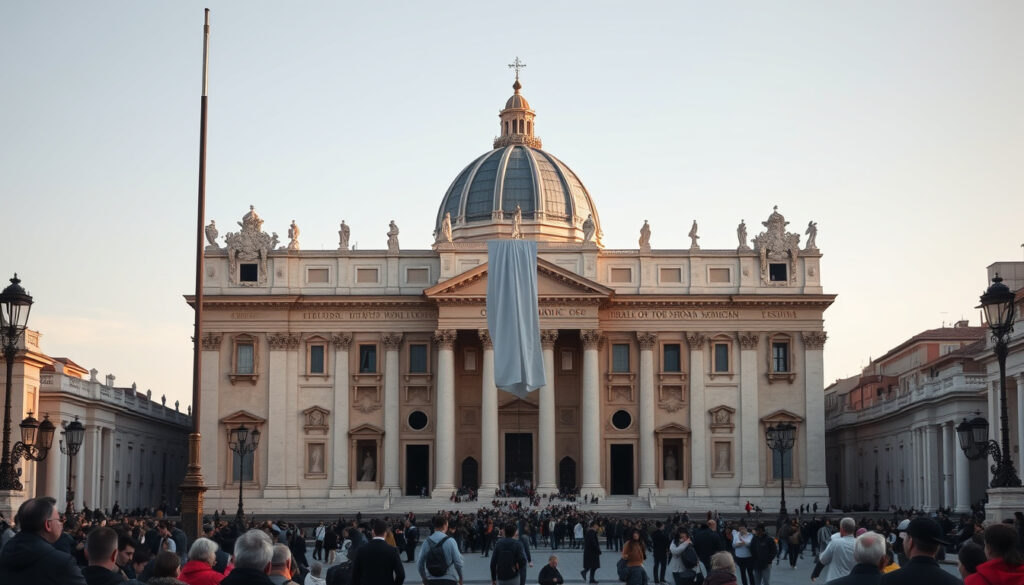
Pope Francis (1936-2025): Biography, Death, and Legacy
Few figures in modern history have shaped the Catholic Church as profoundly as Pope Francis, whose death on Easter Monday 2025 marked the end of an era. Born Jorge Mario Bergoglio in Buenos Aires, he became the first Jesuit and first Latin American pope at age 76, and this article walks through his life, his reforms, and the final days of a papacy that redefined global faith leadership.
Born: December 17, 1936 ·
Birth Name: Jorge Mario Bergoglio ·
Papacy Began: March 13, 2013 ·
Died: April 21, 2025 ·
Age at Death: 88 ·
Nationality: Argentine
Quick snapshot
- Born Jorge Mario Bergoglio on December 17, 1936, in Buenos Aires, Argentina (USCCB (U.S. Catholic bishops))
- Elected pope on March 13, 2013 (Phaneuf obituary)
- Died at 07:35 local time on April 21, 2025, in Casa Santa Marta, Vatican City (Vatican News (official))
- Cause of death: cerebral stroke, coma, irreversible cardiovascular collapse (Reuters (international news agency))
- Specific timeline of final illness details beyond the Vatican statement
- Full medical report has not been publicly released in detail
- Some early-life employment records (chemical technician before priesthood) vary in detail
- Exact nature of his final illness beyond the Vatican statement
- The precise sequence of events leading to his death on Easter Monday
- December 17, 1936: Born in Buenos Aires (USCCB)
- March 13, 2013: Elected 266th pope (Phaneuf obituary)
- April 20, 2025: Final public appearance on Easter Sunday (The New York Times (major news outlet))
- April 21, 2025: Died at 07:35 local time (NPR (public radio))
- Pope Leo XIV (Robert Francis Prevost) elected as successor
- Funeral and conclave concluded; new papal direction underway
- Ongoing questions about the Church’s direction under a new leader
Eight key facts, one pattern: a life that spanned the 20th and 21st centuries, from a Buenos Aires neighborhood to the global stage of Vatican leadership.
| Attribute | Value |
|---|---|
| Full Name | Jorge Mario Bergoglio |
| Date of Birth | December 17, 1936 |
| Place of Birth | Buenos Aires, Argentina |
| Date of Death | April 21, 2025 |
| Papacy Start | March 13, 2013 |
| Papacy End | April 21, 2025 |
| Predecessor | Pope Benedict XVI |
| Successor | Pope Leo XIV |
The pattern: a pope who broke historical molds from the moment of his election.
What was Pope Francis’ real name?
Birth name and family background
- He was born Jorge Mario Bergoglio on December 17, 1936, in the Flores neighborhood of Buenos Aires, Argentina (USCCB (U.S. Catholic bishops)).
- His parents were Italian immigrants: Mario Bergoglio, a railway worker, and Regina Sivori, a homemaker. He was one of five children.
- Before entering the priesthood, he worked as a chemical technician and studied at the University of Buenos Aires.
Meaning of his papal name
- Upon election, he chose the name Francis in honor of Saint Francis of Assisi, signaling a commitment to humility, poverty, and care for creation.
- He was the first pope to take that name.
Bottom line: Pope Francis was born Jorge Mario Bergoglio, a son of Italian immigrants. His papal name reflected his dedication to simplicity and service.
The implication: his identity and chosen name shaped every reform he pursued.
How old was Pope Francis when he died?
Date of birth and death calculation
- Born December 17, 1936; died April 21, 2025 — he was 88 years old at the time of his death (Vatican News (official)).
- He died at his residence in Casa Santa Marta (Domus Sanctae Marthae) in Vatican City, not the Apostolic Palace (NPR (public radio)).
Age compared to other modern popes
- At 88, Francis was among the oldest popes at death. Pope Benedict XVI lived to 95 but had resigned; Pope John Paul II died at 84.
- His papacy lasted 12 years, from 2013 to 2025.
Bottom line: Pope Francis died at 88, having lived nearly nine decades that spanned from the Great Depression to the AI era. His 12-year papacy placed him among the longer-serving modern popes.
The catch: his longevity in office amplified the weight of his reforms.
What was Pope Francis’ cause of death?
Official statement from the Vatican
- The Vatican’s health-services director, Dr. Andrea Arcangeli, signed the death certificate stating the cause as a cerebral stroke that led to coma and irreversible cardiovascular collapse (USCCB / CNS).
- Reuters confirmed the Vatican attributed the death to a stroke and irreversible cardiac arrest (Reuters (international news agency)).
Final weeks and health decline
- Francis had a history of respiratory illness, including a hospitalization for bronchitis in February 2025 that developed into double pneumonia (Phaneuf obituary).
- He appeared in public on Easter Sunday, April 20, 2025, just hours before his death (The New York Times (major news outlet)).
- His mobility had been limited in later years, requiring a wheelchair.
The stroke diagnosis came as a shock after a public Easter appearance. It underscores how quickly his health declined — and how the Vatican managed the transition with minimal public warning.
Bottom line: The official cause of death was a cerebral stroke leading to coma and cardiovascular collapse, compounded by prior respiratory issues. His final public appearance was Easter Sunday, less than 24 hours before his death.
The pattern: a swift end that echoed his life’s unpredictability.
When was Pope Francis born?
Early life in Buenos Aires
- Born December 17, 1936, in the Flores neighborhood of Buenos Aires, Argentina.
- He was one of five children of Italian immigrants Mario and Regina.
- Before his religious calling, he worked as a chemical technician and bouncer at a nightclub — a detail that later became part of his everyman image.
Family of Italian immigrants
- His father Mario was a railway worker; his mother Regina raised the children.
- The family’s immigrant background shaped Francis’s lifelong focus on migrants and refugees.
Bottom line: Born in 1936 to Italian immigrants in Buenos Aires, Francis’s early life as a chemical technician and his family’s immigrant story deeply influenced his papal priorities.
The implication: his origins gave him a unique perspective on global inequality.
Where did Pope Francis go to school?
Secondary education
- He attended Wilfrid Barón High School in Buenos Aires, where he graduated with a technical degree.
University and seminary training
- He initially studied chemistry at the University of Buenos Aires, but left to enter the Seminary of Villa Devoto.
- He later studied at the Colegio de San José in San Miguel, where he earned a master’s in philosophy and theology.
- He was ordained a priest on December 13, 1969, after completing his Jesuit formation.
Bottom line: Pope Francis’s education was a blend of secular science (chemistry) and deep religious training, culminating in a master’s in philosophy and theology from the Jesuit Colegio de San José.
What this means: his intellectual range matched his later reformist agenda.
Timeline
- December 17, 1936 — Born Jorge Mario Bergoglio in Buenos Aires, Argentina. (USCCB)
- 1958 — Entered the Society of Jesus (Jesuits). (Wikipedia)
- December 13, 1969 — Ordained as a priest. (Wikipedia)
- 1998–2013 — Served as Archbishop of Buenos Aires. (Wikipedia)
- February 2001 — Created a Cardinal by Pope John Paul II. (Wikipedia)
- March 13, 2013 — Elected Pope, taking the name Francis. (Phaneuf obituary)
- 2015 — Published encyclical Laudato Si’ on climate change. (Wikipedia)
- April 21, 2025 — Died at age 88 in Vatican City. (Vatican News)
Bottom line: From a Buenos Aires childhood to the Vatican’s highest office, his timeline shows a steady rise through the Church’s ranks, culminating in a transformative 12-year papacy.
The pattern: each milestone prepared him for an unprecedented role.
Clarity check
Confirmed facts
- Born Jorge Mario Bergoglio on December 17, 1936 (USCCB)
- Elected pope on March 13, 2013 (Phaneuf obituary)
- Died on April 21, 2025, at age 88 (Vatican News)
- First Jesuit and Latin American pope (Wikipedia)
- Cause of death: cerebral stroke leading to coma and cardiovascular collapse (Reuters)
What’s unclear
- Specific medical cause of death pending official detailed report
- Exact timing of final illness details less public
- Some records of his early jobs before priesthood vary in detail
Bottom line: While the core facts are solid, some details of his final health decline and early employment remain unverified.
The catch: the gap between official statements and full transparency leaves room for speculation.
Voices on his legacy
“Pope Francis died at 07:35 local time on Easter Monday in his residence at Casa Santa Marta. He was 88.”
— Vatican News (official death announcement)
“I want a poor Church for the poor.”
— Pope Francis, early in his papacy
“We entrust ourselves to the Lord. He will guide us.”
— Cardinal Robert Francis Prevost (now Pope Leo XIV), upon his election as successor
The death of Pope Francis ends a 12-year papacy that sought to reform a divided institution, focus on the poor, and address climate change. For the Catholic Church, the question is whether his successor will continue that path or pivot. For the global public, Francis leaves a legacy of humility, transparency, and a willingness to challenge dogma. The real test will be whether the institutional Church can maintain the trust he rebuilt.
en.wikipedia.org, news.northeastern.edu, nbcnews.com, youtube.com, ncronline.org
Those seeking a deeper understanding of his papacy may consult Pope Franciss biography and legacy.
Frequently asked questions
What were Pope Francis’ most notable reforms?
He simplified annulment procedures, pushed for a more decentralized church, increased financial transparency, and appointed more women to Vatican roles.
How did Pope Francis change the Catholic Church?
He shifted the tone from doctrinal enforcement to pastoral mercy, emphasized care for migrants and the environment, and encouraged dialogue with LGBTQ+ Catholics.
What is Pope Francis’ encyclical Laudato Si’ about?
It is a 2015 encyclical on care for the environment, calling for action on climate change and ecological justice.
Who succeeded Pope Francis?
Cardinal Robert Francis Prevost, an American Augustinian, was elected Pope Leo XIV on April 22, 2025.
What was Pope Francis’ relationship with other religious leaders?
He fostered interfaith dialogue, including a historic meeting with Grand Imam Ahmad al-Tayeb in 2019 and a visit to Iraq.
How long was Pope Francis pope?
He served as pope for 12 years, from March 13, 2013, to April 21, 2025.
What were Pope Francis’ views on climate change?
He considered climate change a moral issue, advocating for sustainable development and the protection of the planet in Laudato Si’.
Related reading
More related posts
 Kogan Mobile Plans: Prepaid 365 Day Deals Compared
 Belinda Giblin: Age, Home and Away, Health, and Current Life
 Jamie Dunn: Biography, Marriages, Cause of Death
 AI Chatting: Legal, Private, and Free Options (2026 Guide)
 Cameron Munster: Biography, family, pub & ADHD
 Mia McKenna-Bruce Biography: Age, Husband, and BAFTA Rise
 Richard Madden: Biography, Partner, Height, Movies & TV Shows
 Patrick Mahomes: Contract, Net Worth, Injuries & Biography
