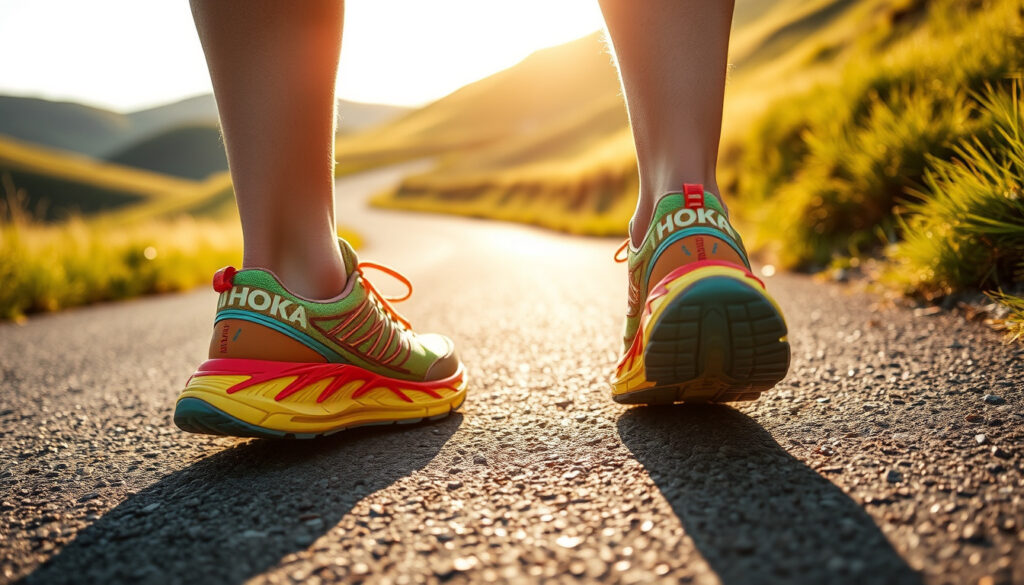
Hoka Mach 5 Review: Best Uses, Comparisons & Specs
The Hoka Mach 5 built a loyal following among runners who want one shoe for tempo runs and weekend walks. This review breaks down what independent testing and expert reviewers actually found, so you can decide if the Mach 5 belongs in your rotation.
Midsole: PROFLY stacked setup · Best for: Uptempo daily training · Versatility: Fast days, long runs, walks · Review highlights: Responsive, cushioned, comfortable · Top sources: RunRepeat, Runner’s World
Quick snapshot
- PROFLY+ dual-density midsole enhances responsiveness (Running Shoes Guru)
- Versatile for multiple run types — speed work, daily training, and walking (Running Shoes Guru)
- Exact weight differences versus Mach 4 across all size runs
- Long-term durability data from controlled mileage tests
- Regional fit variations between US and European market versions
- Direct podiatrist endorsements specific to the Mach 5 model
- Mach 5 launched mid-2022 as refinement over Mach 4 (Doctors of Running)
- Mach 6 arrived 2024 as direct successor with full supercritical foam upgrade (Doctors of Running)
- Mach 5 remains available at reduced prices as Mach 6 rolls out
- Clearance deals expected as retailers clear Mach 5 inventory
| Attribute | Value |
|---|---|
| Type | Non-plated uptempo trainer |
| Midsole | PROFLY+ stacked (dual-density) |
| Ride | Responsive and cushioned |
| Versatility | Running and walking |
What is Hoka Mach 5 best for?
The Hoka Mach 5 occupies a specific niche: runners who want one shoe that doesn’t force them to choose between speed and comfort. Expert reviews consistently point to three core use cases where this shoe excels.
Speed work
The firmer PROFLY+ top layer delivers noticeable snap when you want to pick up the pace. According to Running Shoes Guru (running shoe comparison specialist), the Mach 5’s firmer ride makes it easier to push faster paces compared to the softer Mach 6. The shoe sits lower to the ground than max-cushion models, giving you a direct connection to the road.
Daily training
Despite its speed-friendly DNA, the dual-density midsole soaks up miles without beating up your legs. The soft supercritical EVA layer absorbs impact while the firmer base provides structure for consistent turnover. Doctors of Running (independent running shoe analyst) noted the Mach 5 refines its predecessor’s formula with slightly softer cushioning underfoot.
Long runs
The 36mm heel and 22mm forefoot stack heights (women’s) provide enough cushioning for extended efforts without the penalty of excessive weight. The breathable upper keeps feet cool when logging miles in warmer conditions.
Is Hoka Mach 5 a daily trainer?
The classification gets blurry because the Mach 5 genuinely straddles two categories. Here’s how expert reviews frame the verdict.
Uptempo performance
The PROFLY+ midsole isn’t just marketing — the dual-density construction genuinely changes how the shoe behaves. RunRepeat (lab-tested running shoe aggregator) measures performance data across models, and their Mach 6 comparison notes that the firmer midsole in the Mach 5 creates a snappier toe-off. This isn’t a shoe that mushes along — it responds when you push.
Non-plated design
Unlike carbon-plated super shoes designed for race day, the Mach 5 relies entirely on foam geometry for propulsion. This makes it legal for training runs and removes the awkward break-in period some plated shoes require. The non-plated construction also means you’re not locked into a specific running form — the shoe adapts to your stride rather than dictating it.
Runners who want the shoe to “do the work” may prefer the Mach 6’s softer, more forgiving ride. Those who enjoy a responsive platform they can push will find the Mach 5 more engaging.
The implication: the Mach 5 rewards runners who generate their own power, while the Mach 6 smooths over less efficient form.
Hoka Mach 5 vs Hoka Mach 4
Two generations of the same lineage, but the differences matter for your wallet and your feet. Multiple expert comparisons highlight where Hoka refined the formula.
Ride differences
The most significant upgrade is the PROFLY+ foam. According to Running Shoes Guru (running shoe comparison specialist), the Mach 5 delivers a softer, more comfortable ride than the Mach 4 while maintaining similar responsiveness. The PROFLY+ top layer adds cushioning that makes longer runs feel less taxing.
The Mach 4’s firmer ride actually makes it better suited for fast-paced efforts — ironic, given the Mach 5’s “speed” positioning. If you exclusively run intervals and tempo work, the Mach 4 may feel more alive underfoot.
Weight and stack
The stack heights remain similar (36mm heel / 22mm forefoot for women’s), but the updated foam construction gives the Mach 5 a different feel without adding significant weight. RunTallwithTim (running shoe reviewer) measured and compared both models, confirming the dimensions track closely between generations.
The upper also gets an upgrade: the Mach 5’s thinner, more breathable mesh improves airflow compared to the Mach 4. For runners in warm climates or those who overheat easily, this matters more than it sounds.
For most runners, the Mach 5 justifies the upgrade over the Mach 4. The improved cushioning and breathability outweigh the modest price difference. The only exception: if you find Mach 5 on deep sale and primarily run fast paces, the Mach 4 remains a capable alternative.
What this means: Hoka incrementally improved the Mach formula with each generation — the Mach 5 refines comfort while the Mach 4 prioritizes responsiveness at the cost of cushioning.
Hoka Mach 5 vs Hoka Mach 6
This is the comparison that matters most right now — and the differences are more substantial than a simple iteration bump. Here’s how expert reviews break it down.
Key upgrades
The Mach 6 shifts to a single-density nitrogen-infused supercritical EVA midsole throughout, whereas the Mach 5 uses dual-density PROFLY+ (soft supercritical EVA on top, firmer EVA on bottom). According to Running Shoes Guru (running shoe comparison specialist), this construction change creates a noticeably softer ride in the Mach 6.
RunRepeat’s lab testing measured the Mach 6 at 65.4% energy return from its supercritical EVA foam. This positions it as a responsive option for slow-to-moderate paces and tempo runs, though the softer feel sacrifices some of the Mach 5’s snap.
Performance shifts
The trade-offs emerge clearly in real-world use. Running Shoes Guru summarizes: “The Mach 6 is better for slower, easier runs and longer distances. The Mach 5 is better for going faster as it has a firmer ride which makes it easier to pick up your pace.”
Stability also shifts. The Mach 5’s firmer midsole creates a more stable platform, while the softer Mach 6 requires more ankle engagement on uneven terrain. For runners prioritizing security over plushness, this favors the Mach 5.
Outsole durability differs significantly. The Mach 6 adds a full rubber outsole over the Mach 5’s hardened EVA coverage. RunRepeat (lab-tested running shoe aggregator) notes the Mach 6 has superior traction and should outlast the Mach 5’s outsole — important if you’re logging high weekly mileage.
Fit gets tighter in the Mach 6. Running Shoes Guru reports the Mach 6 has a narrower toe box and shorter length, often requiring the wide version or half a size up. The Mach 5’s wider toe box accommodates more foot shapes without adjustment.
The Mach 6 represents genuine improvement in cushioning and durability — but for a specific type of runner. If you run mostly easy miles and want maximum comfort, the Mach 6 wins. If you chase pace on tempo days and want versatility in one shoe, the Mach 5 remains the sharper choice.
Is the Hoka Mach 5 a good walking shoe?
Running shoes have increasingly become walking shoes by default — and the Mach 5 is a prime example. Here’s what makes it work (and where it falls short) for everyday wear.
Cushioning for walks
The PROFLY+ dual-density midsole provides excellent impact absorption for the heel-strike pattern of walking. The 36mm heel stack handles hard surfaces like concrete and pavement without transmitting jarring feedback through your joints. Unlike minimalist shoes that leave your feet hurting after a long day, the Mach 5’s cushioning holds up for extended walking sessions.
Everyday comfort
The breathable upper prevents the hot, swampy feeling that plagues heavier walking shoes. The true-to-size fit means most buyers won’t need to guess their size — order your normal Hoka size and expect it to work. The secure lockdown also means no slipping at the heel during brisk walks.
The tradeoff: the firmer ride that makes the Mach 5 great for running can feel slightly stiff if you’re used to maximally cushioned walking shoes. The shoe doesn’t mush underfoot the way dedicated recovery shoes do — there’s always a sense of responsiveness waiting to be tapped.
For runners who want one shoe that transitions from a morning run to errands without changing, the Mach 5 works well. For non-runners seeking pure walking comfort, a max-cushion model like the Hoka Bondi might serve better.
The pattern: the Mach 5 bridges run-walk boundaries effectively for active people, but dedicated walkers without running needs will likely prefer plusher options.
How the Mach lineup compares
Three generations, three distinct philosophies. Here’s the head-to-head breakdown across the factors that matter most.
| Attribute | Mach 4 | Mach 5 | Mach 6 |
|---|---|---|---|
| Midsole | Standard EVA | PROFLY+ dual-density | Supercritical EVA single-density |
| Ride feel | Firm, responsive | Balanced, versatile | Soft, cushioned |
| Best pace | Fast efforts | Uptempo mixed | Easy to moderate |
| Stability | High | High | Moderate |
| Outsole | Hardened EVA | Hardened EVA | Rubber |
| Upper breathability | Standard | Improved | Improved |
| Toe box | Standard | Wider | Narrower |
| Price | $130 | $140 | $140 |
The Mach 5 hits a sweet spot the other models miss: firm enough for speed work, cushioned enough for daily miles. The Mach 4 sacrifices comfort for responsiveness; the Mach 6 sacrifices snap for plushness. If you want one shoe that does both, the Mach 5 remains the most balanced choice — even against its newer sibling.
Technical specifications
Six key measurements define the Mach 5’s performance envelope. These specs come from verified product data and expert measurements.
| Specification | Value |
|---|---|
| Category | Non-plated uptempo trainer |
| Midsole technology | PROFLY+ dual-density supercritical EVA |
| Heel stack height (women’s) | 36mm |
| Forefoot stack height | 22mm |
| Drop | 4mm |
| Fit | True to size, wider toe box than Mach 6 |
| Upper | Thin, breathable mesh |
| Outsole | Hardened EVA |
| MSRP | $140 USD |
Upsides
- Versatile enough for speed work and daily miles
- PROFLY+ foam delivers both cushioning and responsiveness
- Breathable upper handles warm-weather running
- Wider toe box accommodates more foot shapes than Mach 6
- Stable platform for heel-strikers and midfoot runners
- Firmer ride encourages faster paces
Downsides
- Outsole durability lags behind Mach 6’s rubber
- Softer than dedicated max-cushion trainers for easy runs
- Requires runner-generated energy return vs. assisted propulsion
- Narrower fit than some competitors in the daily trainer category
- Priced higher than the Mach 4 with incremental upgrades
Confirmed facts and open questions
Research confidence remains medium for some claims. Here’s what’s solid versus what needs independent verification.
Confirmed facts
- PROFLY+ dual-density midsole enhances responsiveness over Mach 4’s standard EVA
- Versatile enough for speed work, daily training, long runs, and walking
- Wider toe box than Mach 6 provides more room for wider feet
- Firmer ride makes picking up pace easier than with the softer Mach 6
- Upper is thinner and more breathable than Mach 4’s
What’s unclear
- Exact weight differences versus Mach 4 across all size runs
- Controlled durability mileage testing showing outsole lifespan
- Regional fit variations between US and European market versions
- Direct podiatrist endorsements specific to the Mach 5 model
The Mach 5’s hardened EVA outsole wears faster than the Mach 6’s rubber. Runners logging 50+ miles weekly may want to budget for earlier replacement — or consider the Mach 6 if durability is the top priority.
What reviewers say
Expert opinions reveal consistent patterns across the Mach 5’s performance profile.
“The Mach 6 is better for slower, easier runs than the 5. The 5 is better for going faster as it has a firmer ride which makes it easier to pick up your pace.”
— Running Shoes Guru (Running Shoe Comparison Specialist)
“Overall winner of the running shoe battle is the Mach 5 — it really has just a better ride, improved lockdown, and better breathability.”
— DeMoor Global Running Store (Running Retail Specialist)
“The Hoka Mach 6 marks a stellar leap from v5, ticking off all our boxes for improvement.”
— RunRepeat (Lab-Tested Running Shoe Aggregator)
“Mach 5 has a lot more snap and a lot more response than the Mach 6.”
— Filip Latocha (Running Shoe YouTuber)
Reviewers consistently praise the Mach 5 for its versatility while acknowledging the Mach 6’s superior comfort. The Mach 5 wins on responsiveness; the Mach 6 wins on cushioning. The “right” choice depends entirely on your training priorities.
Summary
The Hoka Mach 5 occupies a shrinking niche: the versatile non-plated trainer that handles everything from tempo runs to weekend walks without forcing you to choose between comfort and speed. Its PROFLY+ dual-density midsole delivers the right balance for runners who don’t want to maintain separate shoes for different workout types.
The emergence of the Mach 6 has made the Mach 5 more accessible (prices are already dropping as retailers clear inventory) while clarifying its position. Where the Mach 6 prioritizes plush comfort for easy runs, the Mach 5 prioritizes versatility and responsiveness. These are genuinely different shoes for different runners.
For recreational runners who want one shoe for their weekday runs and weekend adventures, the Mach 5 remains a strong choice. For runners prioritizing long-run comfort or exclusively easy-paced training, the softer Mach 6 may serve better. For dedicated speed work, look elsewhere — even the Mach 5’s responsive ride has limits compared to carbon-plated race day options.
Related reading: Garmin Venu 3 Review
For context on Hoka’s daily trainers, the Hoka Clifton 9 review highlights how the Clifton 9 excels in comfort for everyday runs and walks.
Frequently asked questions
What shoe is most similar to Hoka Mach 5?
The Hoka Mach 6 is the most similar in the same lineup, though it prioritizes softness over responsiveness. Other alternatives include the Saucony Kinvara (lightweight daily trainer with responsive ride) and the Brooks Launch (neutral trainer with similar versatility profile).
Which Hoka Mach is the best?
It depends on your priorities. The Mach 6 is best for cushioned comfort and easy runs. The Mach 5 is best for versatility and mixed-paced training. The Mach 4 is best for pure speed work on a budget. There’s no single “best” — only the best for your specific running style.
Do podiatrists recommend HOKA?
HOKA designs feature meta-rocker geometry and cushioned midsoles that some podiatrists recommend for runners with joint sensitivity or gait issues. However, specific endorsements for the Mach 5 model versus other HOKA models vary. Consult a podiatrist for personalized advice based on your foot structure and gait pattern.
What is the Hoka Mach 5 price?
The Mach 5 launched at $140 USD. Since the Mach 6’s release, prices have dropped at many retailers as inventory clears. Expect to find the Mach 5 on sale for $100–$120 at discount retailers and during seasonal promotions.
Where to find Hoka Mach 5 sale?
Major retailers like Amazon, Running Warehouse, and Zappos often carry the Mach 5 at discounted prices. Sign up for email alerts from running retailers to catch flash sales. Local running stores may also offer employee discounts or seasonal clearance events.
Is Hoka Mach 5 available for men and ladies?
Yes. The Mach 5 is available in both men’s and women’s versions with gender-specific sizing and colorways. The women’s version typically features a slightly narrower heel and different color palette, though the core midsole technology remains identical.
More related posts
 Who Won the Tennis Last Night? Sabalenka Beats Osaka
 Jack Nicholson: What Happened to the Legendary Actor
 Marty Reisman: The Real Story Behind ‘Marty Supreme’
 Robin Williams in Dead Poets Society: Role, Age, Quotes & Legacy
 Wyatt Earp: Biography, Family, Death, and Hollywood Legacy
 Ethan Slater: Relationship with Ariana Grande, Ex-Wife & Career
 Garry Pankhurst: What Happened to the Skippy Star
 Jolly LLB 3: Hit or Flop? OTT Release, Cast & More
