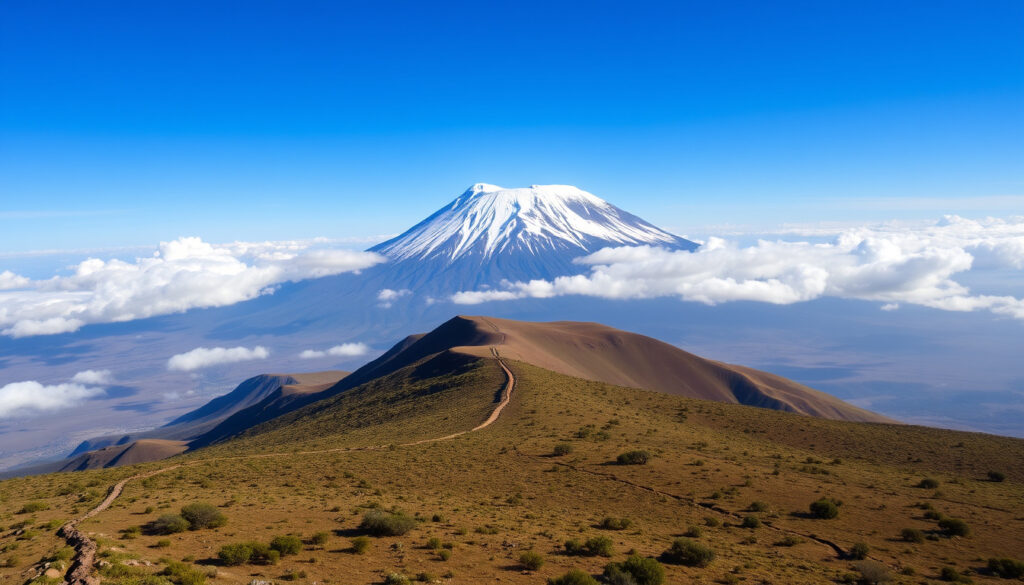
Mt Kilimanjaro: Height, Difficulty, Fatalities, and Beginner Guide
There’s something about Mount Kilimanjaro that draws people who have never climbed a mountain before. Rising 5,895 meters (19,341 feet) above Tanzania, it is Africa’s highest peak and the world’s tallest freestanding mountain. This guide covers the real difficulty, the fatality numbers, and how it compares to Everest — so you can decide if it’s your next adventure.
Height: 5,895 m (19,341 ft) ·
Location: Tanzania (near Kenya border) ·
Type: Dormant volcano (Shira, Kibo, Mawenzi cones) ·
First ascent: 1889 (Hans Meyer and Ludwig Purtscheller) ·
Annual climbers: 35,000–50,000
Quick snapshot
- Africa’s highest mountain at 5,895 m (Encyclopaedia Britannica (reference work))
- Dormant volcano with three cones (Wikipedia (online encyclopedia))
- No technical climbing required on standard routes (Climbing Kilimanjaro (trekking operator))
- Exact annual death toll not centrally recorded; estimates range 10–20 per year (Ultimate Kilimanjaro (guide operator))
- Future volcanic activity cannot be precisely predicted (Encyclopaedia Britannica (reference work))
- Last eruption around 150,000–200,000 years ago on Kibo cone (Encyclopaedia Britannica (reference work))
- Climber numbers continue to rise; improved safety protocols and evacuation systems (Climbing Kilimanjaro (trekking operator))
Key Facts about Mount Kilimanjaro
These six attributes define the mountain’s essential profile.
| Attribute | Value |
|---|---|
| Country | Tanzania |
| Elevation | 5,895 m (19,341 ft) |
| Prominence | 5,885 m (19,308 ft) |
| First ascent | 1889 by Hans Meyer and Ludwig Purtscheller |
| Volcanic status | Dormant (three cones: Shira, Kibo, Mawenzi) |
| Last eruption | Approximately 150,000–200,000 years ago on Kibo |
The pattern: Kilimanjaro’s height and volcanic history make it a unique geological landmark.
How many climbers died on Kilimanjaro?
Determining the exact death count on Kilimanjaro is complicated because there is no central registry. Based on multiple trekking operators and a few academic studies, the best estimate is between 3 and 20 fatalities per year among 35,000–50,000 annual climbers. One study covering 1996–2003 found 25 deaths over eight years (Climb Mount Kilimanjaro (guide site)). That translates to a mortality rate of roughly 0.03% to 0.1%.
First-time climbers face a very low absolute risk, but altitude illness remains the leading cause of fatalities, making proper acclimatization non-negotiable.
What is the fatality rate on Kilimanjaro?
- Estimated mortality rate: 0.03%–0.1% per climb
- About 1,000 people are evacuated each year due to altitude sickness
What are the main causes of death on Kilimanjaro?
- Altitude-related illnesses: Acute Mountain Sickness (AMS), High Altitude Pulmonary Edema (HAPE), High Altitude Cerebral Edema (HACE) — these account for the majority of fatalities
- Falls, hypothermia, and pre-existing conditions also contribute
Bottom line: Kilimanjaro is not a death trap, but altitude kills. The risk is manageable with proper acclimatization and a responsible operator. For beginners, the choice is clear: plan a slow ascent, choose a longer route, and descends if symptoms appear.
The implication: most deaths are preventable. The small absolute risk should not deter a prepared climber, but underestimating altitude is the mistake that costs lives.
Which is harder: Kilimanjaro or Everest?
Comparing Kilimanjaro to Everest is like comparing a long hike to an expedition. Kilimanjaro is a non-technical trek — you walk up. Everest requires ropes, crampons, ice axes, and months of preparation. Kilimanjaro’s summit is 5,895 m, well below the “death zone” above 8,000 m where supplemental oxygen is critical (Ultimate Kilimanjaro (guide operator)).
Why is Kilimanjaro considered less technical than Everest?
- Standard Kilimanjaro routes require no climbing gear beyond trekking poles
- Everest climbers must navigate the Khumbu Icefall, Lhotse Face, and Hillary Step (Zara Tanzania Adventures (trekking operator))
What are the altitude and summit rates for each?
- Kilimanjaro summit rate: approximately 65–85% depending on route; Everest summit rate: about 40–60%
- Everest’s summit is 8,849 m; Kili’s is 5,895 m — a difference of 2,954 m
Bottom line: Kilimanjaro is a walk-up challenge; Everest is a full mountaineering ordeal. For a fit beginner with no climbing experience, Kilimanjaro is achievable. Everest is not.
The trade-off: Kilimanjaro’s difficulty is all altitude and endurance; Everest adds technical danger, extreme cold, and the death zone.
Kilimanjaro is easier to attempt but still kills about as many people per year as Everest (roughly 5–10 on each), because thousands more try Kili with less preparation.
Can a beginner hike Mount Kilimanjaro?
Yes — with caveats. Kilimanjaro is regularly described as a “walk-up” mountain suitable for fit beginners who have never used an ice axe. The main challenge is altitude adaptation, not technical skill.
What fitness level is required for Kilimanjaro?
- Good cardiovascular fitness; ability to hike 5–8 hours per day on uneven terrain
- No rock climbing or rope work needed
What are the best routes for beginners on Kilimanjaro?
- Marangu route: 5–6 days, hut accommodation, gradual ascent — but high failure rate due to short acclimatization
- Rongai route: 5–6 days, less crowded, good for first-timers
- Lemosho route: 7–8 days, high success rate, more camping
Bottom line: Beginners can climb Kilimanjaro if they pick a longer route (7+ days) and train for endurance. The catch: altitude sickness is the equalizer — it can hit anyone regardless of fitness.
Why this matters: choosing the right route and preparing for altitude are more important than gym strength. A beginner with a slow itinerary has a better chance than an athlete on a fast climb.
Why is Mount Kilimanjaro so famous?
Mount Kilimanjaro is the highest mountain in Africa and the tallest freestanding mountain above sea level anywhere on Earth. Its snow-capped summit rises from the African savanna, visible from far away. The mountain is a dormant volcano with three cones: Shira, Kibo, and Mawenzi.
What makes Kilimanjaro unique among mountains?
- It stands alone — not part of a mountain range
- Climbers pass through five ecological zones, from rainforest to arctic summit
Is Kilimanjaro the tallest freestanding mountain in the world?
- Yes — from base to summit, it rises about 4,900 m above the surrounding plateau
The pattern: Kilimanjaro’s fame rests on being both accessible and iconic — it’s the easiest of the Seven Summits to attempt, yet its height and isolation give it legendary status.
Do you need oxygen to climb Kilimanjaro?
Supplemental oxygen is not required for Kilimanjaro. The summit at 5,895 m is above the threshold where oxygen levels drop significantly, but climbers acclimatize by ascending slowly (“pole pole” in Swahili). Many climbers use the “climb high, sleep low” strategy.
Is supplemental oxygen recommended on Kilimanjaro?
- Not recommended for healthy climbers on standard routes — it can mask symptoms and give a false sense of security
- Some operators offer oxygen for clients with health concerns
What altitude sickness risks are there on Kilimanjaro?
- AMS (headache, nausea, fatigue) is common; HAPE and HACE are life-threatening
- Descent is the only definitive treatment for severe altitude sickness
Bottom line: You do not need bottled oxygen for Kilimanjaro. The real requirement is a slow, well-planned climb that lets your body adjust. Supplemental oxygen is not a shortcut — proper acclimatization is.
The catch: ignoring altitude symptoms can be fatal. The 2,954 m difference to Everest’s summit means Kilimanjaro’s oxygen levels are less extreme, but they still kill climbers every year.
Kilimanjaro vs Everest: Full Comparison
The two mountains attract very different climbers, but a side-by-side reveals why one is a beginner challenge and the other a professional expedition.
| Attribute | Kilimanjaro | Everest |
|---|---|---|
| Height | 5,895 m (19,341 ft) | 8,849 m (29,032 ft) |
| Technical difficulty | Non-technical trek (walk-up) | Advanced mountaineering (ropes, crampons, ice axes required) |
| Oxygen required | No | Yes above 8,000 m |
| Estimated annual fatalities | 5–20 | 5–10 (but far fewer climbers) |
| Fatality rate (per climb) | ~0.03–0.1% | ~1–2% |
| Summit success rate | 65–85% | 40–60% |
| Typical duration | 5–8 days | 6–9 weeks |
| Experience required | Good fitness, no climbing experience | Years of high-altitude climbing experience |
The implication: Kilimanjaro’s lower fatality rate per climb and non-technical profile make it a realistic goal for beginners. Everest is a completely different league — it demands training, experience, and a budget that can exceed $50,000.
Mount Kilimanjaro Specifications
Six key numbers define the mountain’s physical profile, from prominence to volcanic history.
| Specification | Value |
|---|---|
| Elevation | 5,895 m (19,341 ft) |
| Prominence | 5,885 m (19,308 ft) |
| Coordinates | 3°04′S 37°21′E |
| Volcano type | Stratovolcano (dormant) |
| Number of cones | 3 (Shira, Kibo, Mawenzi) |
| Last eruption (Kibo) | ~150,000–200,000 years ago |
The pattern: Kilimanjaro’s height and isolation make it the world’s tallest freestanding mountain — a record it holds by a wide margin over the next contender, Denali (Mount McKinley) at 6,190 m of prominence.
How to Climb Kilimanjaro: Steps for Beginners
- Choose a route. Pick a 7-day route like Lemosho or Machame for better acclimatization. Avoid shortest routes for your first climb.
- Train for endurance. Build up to hiking 5–8 hours on varied terrain with a loaded daypack. Include stair climbing and lunges to strengthen legs.
- Acclimatize intentionally. Plan extra days at intermediate altitudes. Follow the “pole pole” pace and climb high, sleep low to reduce AMS risk.
- Pack wisely. Layered clothing, warm sleeping bag, gaiters, trekking poles, hydration system, altitude medication (acetazolamide per doctor advice).
- Watch for altitude symptoms. Headache, nausea, dizziness are early signs. If symptoms worsen at rest, descend immediately. No summit is worth your life.
- Hire a reputable operator. Ensure guides are certified in wilderness first aid and carry oxygen and communication equipment. Read reviews carefully.
Why this matters: a well-planned climb not only improves your chance of summiting but also keeps you safe. The majority of fatalities occur when climbers ignore symptoms or choose too-short itineraries.
What We Know and What’s Unclear
Confirmed facts
- Kilimanjaro is 5,895 m tall — that is the exact elevation measured by modern surveys (Encyclopaedia Britannica (reference work))
- It is a dormant volcano with three cones
- First recorded ascent was in 1889 (Wikipedia (online encyclopedia))
- No supplemental oxygen is needed for climbing
What’s unclear
- Exact annual death count — not centrally recorded, estimates vary from 3 to 20 per year
- Future volcanic activity — the mountain is dormant but not extinct; small eruptions could occur in the distant future
The implication: climbers should rely on confirmed facts while acknowledging the uncertainties in mortality data.
Expert Perspectives
“Kilimanjaro is a trek, not a climb. The danger comes from altitude, not from the terrain itself.”
“The vast majority of deaths on Kilimanjaro are due to altitude-related illnesses — AMS, HAPE, or HACE.”
“Kilimanjaro does not have a traditional death zone, but that doesn’t mean it’s safe. Acclimatization is everything.”
Ultimate Kilimanjaro (guide operator)
What this means: Experienced guides consistently warn that altitude is the primary risk, reinforcing the need for careful acclimatization.
For a beginner planning a Kilimanjaro trek, the decision is clear: train for endurance, choose a 7-day route, respect the altitude, and never push through symptoms. That separates a successful summit from a preventable tragedy.
safaribando.com, climbkilimanjaroguide.com, labaafrica.com, extremeguide.pro, goclimbingkilimanjaro.com
Climbers often consult a beginner guide to Kilimanjaros height and difficulty to understand the exact elevation and challenges before planning their ascent.
Frequently asked questions
How many climbers die each year on Kilimanjaro?
Estimates range from 3 to 20 deaths per year, with most caused by altitude sickness. The mortality rate is about 0.03% to 0.1% per climb.
Do I need to be very fit to climb Kilimanjaro?
Good cardiovascular endurance is essential, but you don’t need to be an athlete. Training should focus on long hikes with elevation gain.
What route is best for a first-time climber?
Longer routes like Lemosho (7 days) or Machame (6–7 days) offer better acclimatization and higher success rates. Avoid the 5-day Marangu if you’re a beginner.
Can altitude sickness be prevented on Kilimanjaro?
Prevention relies on slow ascent, proper hydration, and climbing high-sleeping low. Acetazolamide can help, but descent is the only cure for severe symptoms.
How long does it take to climb Kilimanjaro?
Most routes take 5–8 days. Longer itineraries (7+ days) dramatically improve summit success rates.
Is Kilimanjaro harder to climb than Mount Everest?
No — Kilimanjaro is a non-technical trek; Everest requires advanced mountaineering skills, oxygen, and months of preparation. Kilimanjaro is far more accessible for beginners.
What is the success rate for summiting Kilimanjaro?
Overall success rates range from 65% to 85%, depending on route length and season. Longer routes see higher success.
Do I need climbing experience for Kilimanjaro?
No — standard routes require no ropes or ice axes. Only good fitness and a willingness to hike uphill for several days.
The takeaway: With proper preparation, Kilimanjaro is a safe and achievable goal for most fit beginners.
More related posts
 Tommee Tippee Nappy Bin: Cost, Refill Life & Free Options
 Marc Jacobs: Luxury Brand? Biography, Net Worth & More
 Avocado Tree Guide: Planting, Care, Lifespan & Common Problems
 Dolar Australiano a Dolar Americano – 0.6872 Rate and Trends
 Gold Coast Sports and Leisure Centre: Capacity & Courts
 Denise Gough Biography: Career, Sobriety, and Net Worth
 Vinod Khanna: Biography, Smoking, Religion, and Cause of Death
 MYOB Essentials Login: Access, Reset & Troubleshoot
