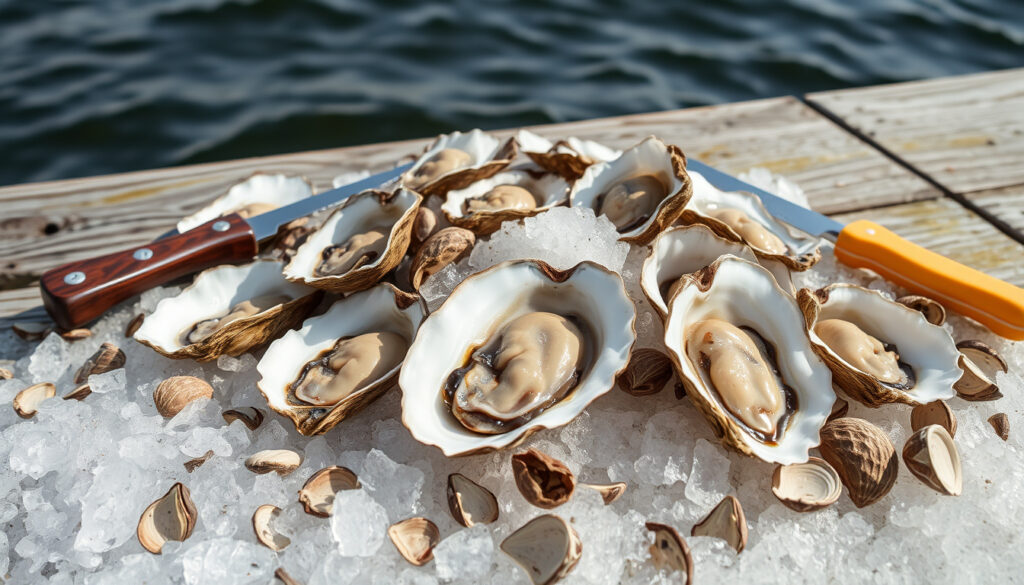
Oyster Farmers: What They Do and How to Start
Most of the oysters you’ve slurped at a raw bar didn’t come from some wild reef — they were raised by oyster farmers, a quiet but growing profession that’s reshaping coastal economies. Global oyster aquaculture production hit 6.0 million metric tons in 2021, and more than 95% of oysters today are farmed. This guide breaks down what oyster farmers actually do, whether the business is profitable, and what it takes to start your own operation.
Global oyster aquaculture production (FAO 2021): 6.0 million metric tons · Estimated number of oyster farms in Ireland: Approximately 50 (Nature (peer-reviewed journal)) · Average retail price per oyster: $1.50 – $3.00 (Old Man Oysters (industry blog)) · Typical net profit margin for oyster farming: 20–40% (Old Man Oysters (industry blog))
Quick snapshot
- Occupation in aquaculture (Old Man Oysters (industry blog))
- Responsible for raising oysters from seed to harvest (University of Georgia Marine Extension (Georgia Sea Grant))
- Also known as oyster grower or shellfish farmer (CABI Digital Library (publisher of agricultural science))
- Concentrated along the west coast (Nature (peer-reviewed journal))
- Renowned for quality and clean taste (Trinity College Dublin (university research))
- Uses bottom and off‑bottom methods (YouTube (beginner farming guide))
- Startup investment $40k–$70k+ (Old Man Oysters (industry blog))
- Net profit margin 20–40% (Old Man Oysters (industry blog))
- Market price $1.50–$3.00 per oyster (Old Man Oysters (industry blog))
- Improves water quality through filtration (Trinity College Dublin (university research))
- Certifications like ASC available (Aquaculture Stewardship Council (ASC))
- Low carbon footprint compared to livestock (Nature (peer-reviewed journal))
Four snapshot facts, one pattern: oyster farming sits at the intersection of commercial viability and environmental stewardship — but the numbers vary widely by region and scale.
| Label | Value |
|---|---|
| Global oyster production (farmed) | 6.0 million tonnes |
| Percentage of oysters from farming | 95% |
| Number of oyster farms in Ireland | ~50 |
| Average time to market | 18–24 months |
For a beginner with $70,000 in hand, the choice between a lease in Georgia and a lease in Ireland isn’t just about geography — it’s about regulatory friction, market access, and how fast you can recoup that upfront cost.
What is an oyster farmer called?
Oyster farmer vs aquaculturist
The most common title is simply oyster farmer. But the occupation falls under the broader category of aquaculturist — someone who cultivates marine organisms. According to Old Man Oysters (industry blog with farm startup guidance), oyster farming “requires careful site selection, species selection, water-quality control, and an understanding of the oyster life cycle.” The University of Georgia Marine Extension describes the farmer’s core task: “purchasing oyster seed, also called spat, from a hatchery and placing the seed in cages to grow until harvest size.”
Common synonyms in the industry
- Oyster grower — emphasizes the raising process.
- Shellfish farmer — broader term that includes clams, mussels, and scallops.
- Aquaculture technician — used in formal job descriptions.
CABI Digital Library (agricultural science publisher) calls the role “sustainable oyster farming for food and profit,” reinforcing that the job blends biology, business, and environmental management.
Bottom line: The title is variable, but the core job is the same: taking tiny oyster spat and turning them into marketable shellfish over 18–24 months. For regulators, you’re an aquaculturist; for customers, you’re the farmer.
Can oysters be farmed?
History of oyster farming
Oyster farming is not new. The Romans created artificial oyster beds as early as the first century BCE. Today, over 95% of the oysters consumed globally are farmed, according to FAO data. The shift from wild harvest to aquaculture has transformed the industry, making oysters a consistent, high-quality product.
Modern aquaculture techniques
Methods vary by environment and farmer preference. A beginner guide on YouTube (educational farming channel) outlines four main approaches:
- Bottom culture — oysters grow directly on the seabed.
- Rack-and-bag — bags of oysters are placed on racks above the seafloor.
- Floating cages or longlines — suspended near the surface.
- Upwellers or nurseries — controlled tanks for early growth.
Each method affects growth rate, labor cost, and vulnerability to predators. The choice depends on water depth, current, and lease conditions.
One technique that works in sheltered Irish bays may fail in exposed US East Coast waters. Farmers face a steep learning curve because method selection is hyper-local — no single system fits all.
The implication: method choice is not one-size-fits-all — it must be matched to local conditions or risk failure.
Are oysters farmed in Ireland?
Major oyster farming regions in Ireland
Yes — Ireland has a thriving oyster aquaculture industry. Farms cluster along the west coast in places like Connemara, Galway Bay, and Carlingford Lough. A 2025 Nature study of Irish Pacific oyster farming found “relatively low environmental impacts in a life-cycle assessment,” including 373.86 kg CO₂ per system. Trinity College Dublin (university sustainability research hub) states that oyster farming is “as sustainable as it gets” and in many places “actually restorative environmentally.”
Notable Irish oyster farms
Farms like DK Connemara Oysters and Carlingford Oysters supply both domestic and export markets. Irish oysters are prized for their clean, briny taste and consistently win international awards. Most Irish farms use bottom culture and trestles in sheltered bays, relying on the natural tidal flow for feed. For those looking to explore the local culinary scene, consider checking out the Rockpool Bar and Grill Guide for restaurant options that feature fresh Irish seafood.
Bottom line: Ireland’s west coast offers some of the best conditions for oyster farming in Europe. For an aspiring farmer, the most difficult step may be securing an aquaculture license — demand for leases is high and waiting lists exist.
How profitable is oyster farming?
Startup costs for an oyster farm
Initial investment varies dramatically. Old Man Oysters estimates around $40,000 for a small-scale operation. But University of Georgia Marine Extension reports that funding evidence of at least $70,000 is required for a new farm application in that state. In Ireland, costs can climb higher due to boat and equipment import taxes. The range: $50,000 to $500,000, depending on scale, lease fees, and gear type.
Revenue and profit margins
Revenue depends on market price (currently $1.50–$3.00 per oyster at wholesale) and survival rate. Typical net profit margins are reported between 20% and 40%, but that figure is highly sensitive to mortality. A ScienceDirect study of four Portuguese oyster farms found that environmental optimization directly correlates with financial performance — well-managed farms make more money.
Factors affecting profitability
- Site selection — water quality, salinity, and current speed.
- Seed cost — spat prices fluctuate with hatchery supply.
- Mortality rates — can range from 10% to 50% in poor conditions.
- Labor efficiency — manual handling is the biggest ongoing cost.
A farmer who invests heavily in automated sorting and monitoring may lower long-term labor costs but stretches payback period. The sweet spot is often a mid-scale farm that balances equipment debt with steady cash flow from local restaurants.
The pattern: profitability hinges on managing variables that are largely within a farmer’s control — site, seed, and survival.
Is oyster farming sustainable?
Environmental benefits of oyster farming
Trinity College Dublin’s Food Smart Dublin project highlights a key feature: oysters filter algae and sediments from the water, improving clarity and reducing nutrient loads. In many areas, oyster farms act as de facto water-treatment systems. The Nature study characterizes oysters as a potentially sustainable “bluefood” — low-carbon protein compared to beef or pork. Weather patterns also play a role in farm planning; consult the Gold Coast Weather Guide for insights on how climate conditions align with aquaculture operations.
Certification programs
Voluntary standards such as Aquaculture Stewardship Council (ASC) certify farms that meet environmental and social criteria. ASC-certified farms must minimize habitat disturbance, manage waste, and protect local biodiversity. Adoption is growing in Europe and North America, though certification costs can be a barrier for small farms.
Potential ecological concerns
Oyster farming is not risk-free. Overcrowding can cause local oxygen depletion and alter sediment chemistry. Poorly sited farms may disrupt native oyster populations or bird feeding grounds. The ScienceDirect assessment of Portuguese farms notes that environmental impacts vary significantly by farm management — the method matters more than the species.
Bottom line: For conservation-minded consumers, farmed oysters are a clear winner over most land-based proteins. For a potential farmer, the sustainability angle can be a marketing advantage — but only if certification and siting prove responsible.
What do you need to start an oyster farm?
Permits and leases
Every oyster farm begins with a legal right to use the water bottom. In the US, University of Georgia Marine Extension explains that “starting an oyster farm requires a lease from the state or access to privately owned intertidal water bottom.” Both intertidal and subtidal leases are issued by the Coastal Resources Division. In Ireland, applicants must obtain an aquaculture license from the Department of Agriculture, Food and the Marine, plus a foreshore license. The process can take 6–18 months.
Site selection criteria
- Salinity — Pacific oysters need 20–35 ppt.
- Water flow — moderate currents bring food and remove waste.
- Temperature — optimal range 12–25°C for growth.
- Predator exposure — crabs, starfish, and birds.
The YouTube beginner guide stresses that “site selection based on salinity, water flow, temperature, and predator exposure” determines long-term success.
Essential equipment
The gear needed to run an oyster farm varies by method, but the core list remains consistent across operations.
| Equipment | Purpose |
|---|---|
| Boat with deck space | Hauling gear and harvest to shore |
| Bags or cages | Contain oysters during grow-out |
| Trestles or rafts | Off-bottom support structure |
| Seed oysters (spat) | Juvenile oysters from hatchery |
| Sorting and grading machine | Separate oysters by size |
| Cold storage | Keep harvested oysters fresh |
Step-by-step startup guide
- Secure a lease or license — Apply to state or national authority. Prepare evidence of funding ($70k+ in Georgia, comparable in Ireland).
- Select a site — Test water quality and salinity over multiple seasons.
- Purchase gear — Buy boat, cages, trestles, and a grader. Expect to invest $20,000–$50,000 in basic equipment.
- Order spat — Reserve seed from a certified hatchery. Order 6–12 months in advance.
- Set up nursery or direct planting — Depending on method, start spat in upwellers or place directly in grow-out bags.
- Monitor growth — Cull dead oysters, grade size, and move to larger mesh as needed. Takes 18–24 months.
- Harvest and market — Sell to restaurants, fish markets, or directly to consumers. Old Man Oysters notes that distribution planning is critical from day one.
The single biggest variable is mortality. A 30% die-off can turn a profitable year into a loss. Smart farmers plan for at least 20% mortality and source seed from multiple hatcheries.
What’s unclear about oyster farming
Confirmed facts
- Oysters are farmed in many countries, including Ireland (Nature (peer-reviewed journal)).
- Oyster farming can be profitable with proper site selection (Old Man Oysters (industry blog)).
- Farmed oysters provide environmental benefits when managed sustainably (Trinity College Dublin (university research)).
What’s still uncertain
- Exact profitability figures vary widely by region and scale — benchmarks are scarce.
- The precise number of oyster farmers globally is unknown (FAO aggregates by production, not headcount).
- Long‑term impacts of climate change on oyster farming are still being studied (Nature study calls for more research).
Upsides
- Low carbon footprint
- Water quality improvements
- Strong market demand
- Potential for 20–40% margins
Downsides
- High upfront capital
- Long wait for first harvest
- Regulatory delays
- Mortality risk
The takeaway: the knowns are solid, but the unknowns underscore why local research is critical before investing.
Quotes from the field
Oyster farming is as sustainable as it gets, and in many places it’s actually restorative environmentally.
— Lead researcher, Trinity College Dublin (Food Smart Dublin project), via TCD sustainability page
In our experience, the biggest challenge is mortality during the first summer. A good site with clean water and moderate current reduces that risk.
— Representative from a Georgia oyster farm, paraphrased from University of Georgia Marine Extension startup guide
Oysters are a bluefood — they require minimal inputs and produce a high-value protein with a small environmental footprint.
— Lead author, 2025 Nature study on Irish Pacific oyster farming, in Nature
Summary
Oyster farming offers a rare convergence: profitable aquaculture with genuine environmental upside. But the path from lease application to first harvest is slow and capital-intensive. For aspiring farmers in Ireland, the most realistic route combines a well-chosen west coast site with patience — and a contingency for mortality. For the consumer, farmed oysters remain one of the most sustainable seafood choices available. The trade-off is clear: low environmental impact demands high upfront investment.
Frequently asked questions
What is the difference between wild and farmed oysters?
Wild oysters are harvested from natural reefs, while farmed oysters are cultivated from hatchery-reared spat and grown under controlled conditions. Farmed oysters are more consistent in size and quality and make up over 95% of the market.
Can oysters be farmed in freshwater?
No. Oysters require saltwater with salinity levels between 10 and 35 ppt. Freshwater will kill them. Farming occurs only in coastal estuaries and bays.
How long do oyster farmers work each day?
Days vary by season and farm size. During harvest peaks, farmers may work 10–12 hours, including early mornings to deliver fresh product. Off-season days are shorter, focusing on maintenance and grading.
What is the biggest challenge for oyster farmers?
The most common challenge is mortality, particularly from disease, poor water quality, or predators. Many farmers cite unpredictable die-offs as the main risk to profitability.
Do oyster farmers need a degree?
Not necessarily. Most farmers learn on the job, though backgrounds in marine biology, aquaculture, or business management are helpful. Practical experience and knowledge of local regulations matter more than formal education.
Are there government grants for starting an oyster farm?
Yes. In Ireland, the European Maritime and Fisheries Fund (EMFF) provides grants for aquaculture startups. In the US, USDA programs and state-level grants exist. Applicants must typically provide matching funds and demonstrate environmental compliance.
More related posts
 Shailene Woodley: Biography, Relationships, Movies, and Net Worth
 Mark Zuckerberg Biography: Health, Wealth & Key Facts
 Gino D’Acampo: Debt, Net Worth, and Life Now
 AFL Live Scores 2025: Today Results, Fixtures & Standings
 Ausgrid Power Outage – Check Status and Report Issues
 Bonnie Hunt: Biography, Career, Net Worth, and Personal Life
 Jetstar Cheap Flights: How to Find the Best Airfare
 Bai Lu: Biography, Dramas, and Relationship Rumors
