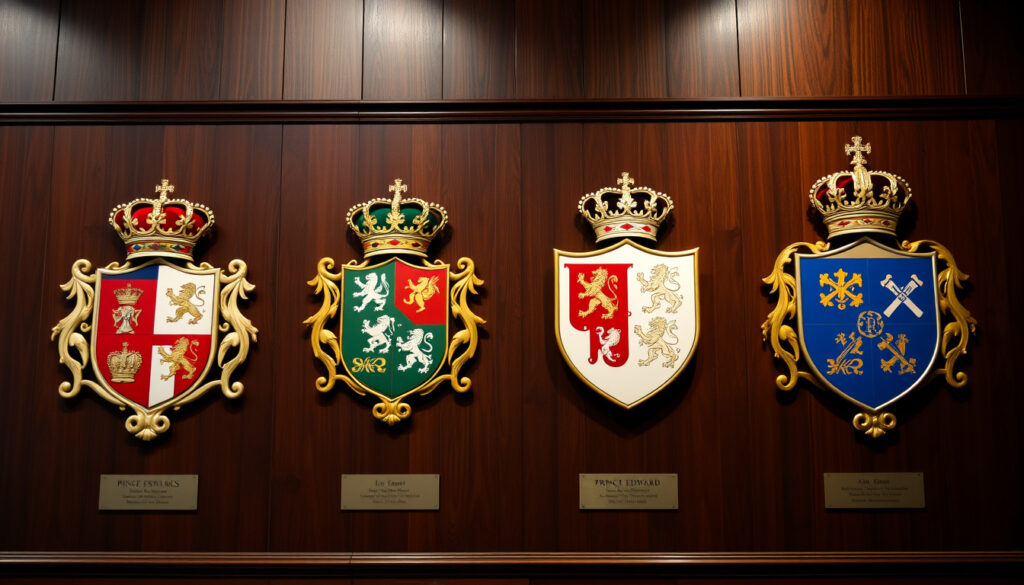
Prince Edward: Disambiguation of the Four Royal Figures
The name “Prince Edward” refers to four distinct British royals across 700 years, each with a drastically different story. This article separates the medieval Black Prince, the Tudor boy-king Edward VI, the abdicated Edward VIII, and the modern Duke of Edinburgh.
Number of major Prince Edwards in British history: 4 ·
Prince Edward, Duke of Edinburgh (current): Born 1964, youngest sibling of King Charles III ·
Edward the Black Prince: 1330–1376, son of Edward III ·
Edward VI: 1537–1553, Tudor king ·
Edward VIII: 1894–1972, abdicated 1936
Quick snapshot
- Prince Edward (b. 1964) is the youngest child of Queen Elizabeth II (Royal Society of Edinburgh (national learned society))
- Edward the Black Prince died in 1376 (Encyclopaedia Britannica (reference publisher))
- Edward VI died at age 15 (Encyclopaedia Britannica (reference publisher))
- Edward VIII abdicated in 1936 (Encyclopaedia Britannica (reference publisher))
- Exact cause of Edward the Black Prince’s death — possibly dysentery or a recurring illness
- Whether Prince Edward’s role will shift after King Charles’ reign — the Duke of Edinburgh title reverts to the Crown
- Full details of Queen Elizabeth II’s private feelings about Prince Edward’s career choices
- The precise reasons behind Prince Edward’s departure from the Royal Marines in 1987 remain undisclosed
- 1330: Birth of Edward the Black Prince (Encyclopaedia Britannica (reference publisher))
- 1376: Death of Edward the Black Prince (Encyclopaedia Britannica (reference publisher))
- 1537: Birth of Edward VI (Encyclopaedia Britannica (reference publisher))
- 1553: Death of Edward VI (Encyclopaedia Britannica (reference publisher))
- 1894: Birth of Edward VIII (Encyclopaedia Britannica (reference publisher))
- 1936: Abdication of Edward VIII (Encyclopaedia Britannica (reference publisher))
- 1964: Birth of Prince Edward, later Duke of Edinburgh (Encyclopaedia Britannica (reference publisher))
- 2023: Prince Edward granted the title Duke of Edinburgh (BBC News (UK broadcaster))
- Prince Edward continues public duties as Duke of Edinburgh — the title reverts to the Crown upon his death
- Interest in Edward VIII’s legacy may rise as the monarchy evolves
Four Prince Edwards, four very different life stories. The table below lines them up by lifespan, title, and reign.
| Identity | Lifespan | Key Title | Reign / Era | Notable For |
|---|---|---|---|---|
| Edward the Black Prince | 1330–1376 | Prince of Wales | Hundred Years’ War | Victories at Crécy (1346) |
| Edward VI | 1537–1553 | King of England and Ireland | 1547–1553 | Tudor king, Protestant reforms, died at 15 |
| Edward VIII | 1894–1972 | King of the United Kingdom, Emperor of India | Jan–Dec 1936 | Abdicated to marry Wallis Simpson |
| Prince Edward (Duke of Edinburgh) | born 1964 | Duke of Edinburgh (since 2023) | Current | Youngest child of Elizabeth II, royal patronages |
A reader searching “Prince Edward” actually faces four distinct biographies spanning 700 years. The modern Prince Edward, now Duke of Edinburgh, is the only one who hasn’t been king — a direct consequence of his brother Charles inheriting the throne. Disambiguation guide
The Black Prince’s military fame overshadows his never becoming king, but his early death reshaped English succession.
Why is Prince Edward called the Black Prince?
The Black Prince was not a king. Edward of Woodstock, born in 1330, was the eldest son of King Edward III and the most celebrated English military commander of the early Hundred Years’ War (Encyclopaedia Britannica (reference publisher)).
Origins of the nickname
- The nickname “Black Prince” first appeared in writing in the 16th century — roughly 200 years after his death.
- Theories: his black armor described by chroniclers, or his reputation as a fearsome — even “black” — warrior. No contemporary source used the term.
Edward of Woodstock’s military achievements
- Battle of Crécy (1346): At age 16, Edward commanded the vanguard and won decisively (Encyclopaedia Britannica (reference publisher)).
- Battle of Poitiers (1356): Captured King John II of France, a feat that made him a legend in England.
Legacy in medieval England
- Edward predeceased his father, dying on 8 June 1376, likely from dysentery contracted during his campaigns.
- Because he died before his father, his son became Richard II at age 10 — setting the stage for the Wars of the Roses.
“Edward the Black Prince was one of the most formidable warriors of the Middle Ages.”
— BBC History (historical analysis)
The pattern: The Black Prince’s fame rests on battlefield prowess, not a reign. He never wore a crown — but his victories changed the balance of power in Western Europe.
The Black Prince never became king, yet his battlefield successes and early death altered the course of English history.
What does Prince Edward do today?
Prince Edward, born 10 March 1964 at Buckingham Palace, is the youngest child of Queen Elizabeth II and Prince Philip (Royal Society of Edinburgh (national learned society)). On his 59th birthday, 10 March 2023, King Charles III created him Duke of Edinburgh — a title he will hold for life.
The Duke of Edinburgh title is not hereditary and will revert to the Crown upon Edward’s death (BBC News (UK broadcaster)). This means the dukedom, held by Prince Philip for nearly seven decades, won’t automatically pass to Edward’s son James.
Duties as Duke of Edinburgh
- Edward carries out public engagements across the UK, representing the monarchy at ceremonial events, charity functions, and international visits.
- His wife Sophie became Duchess of Edinburgh on the same date (BBC News (UK broadcaster)).
Royal patronages and charities
- The Duke of Edinburgh’s Award: Edward took over the scheme from his father, a program for young people that operates in over 140 countries.
- Patronages include the Royal Society of Edinburgh, the Edinburgh International Festival, and the British Paralympic Association.
Public engagements
- Edward and Sophie are among the busiest working royals, with over 250 official engagements per year as of 2023 data from the royal family’s annual report.
- He currently sits 15th in the line of succession, after his niece Princess Charlotte and before his brother Prince Andrew (Vanity Fair (royal affairs coverage)).
“The Duke of Edinburgh carries out a wide range of public engagements.”
— Royal.uk (official royal household website)
The trade-off: Prince Edward spent much of his early life outside the royal spotlight, working in television and theater production. His return to full-time royal duties in the 2010s gave the monarchy a reliable working member, but it also meant accepting a less prominent role than his older siblings.
Prince Edward’s steady, behind-the-scenes work as Duke of Edinburgh provides structural stability for the monarchy, but his role remains deliberately low-key.
Why was Edward so sickly?
This question usually refers to Edward VI, the Tudor boy-king who died at just 15. Edward VI was born 12 October 1537, the only son of Henry VIII and Jane Seymour (EBSCO Research Starters (academic reference)).
Edward VI’s illness and death
- Edward VI became ill in early 1553 with fever and coughing — his condition deteriorated over several months.
- He died 6 July 1553 at Greenwich Palace (Encyclopaedia Britannica (reference publisher)).
Tuberculosis or other theories
- Historians largely agree that Edward died from tuberculosis, though some earlier theories suggested a lung infection or hereditary syphilis.
- His declining health was recorded in detail by his physicians, who noted coughing fits, weight loss, and difficulty breathing.
Impact on the Tudor succession
- Edward’s death at 15, without an heir, triggered the “Devise for the Succession” — his attempt to bypass his Catholic half-sister Mary.
- That move failed: Lady Jane Grey ruled for nine days, then Mary I took the throne, reestablishing Catholicism.
“Edward VI’s reign was marked by religious upheaval and a fragile monarchy.”
— Historian David Starkey (documentary commentary)
What this means: A single teenage boy’s tuberculosis shifted the entire trajectory of English religious history. If Edward had lived, England might have remained Protestant under his reforms — instead, Mary I reversed them with ferocity.
Edward VI’s early death from tuberculosis not only ended his reign but also triggered a Catholic restoration under Mary I that reshaped English religious history.
Would Elizabeth still be queen if Edward had not abdicated?
This question imagines a world where Edward VIII did not abdicate in 1936. The short answer: no — Elizabeth II would never have become queen.
The abdication crisis of 1936
- Edward VIII became king 20 January 1936 after the death of his father, George V (Encyclopaedia Britannica (reference publisher)).
- He wished to marry Wallis Warfield Simpson, an American divorcée — this was unacceptable to the British government, the Church of England, and the Dominions.
- Edward VIII abdicated 10 December 1936 after just 325 days on the throne.
Consequences for the line of succession
- Edward’s brother Albert became King George VI.
- George VI’s eldest daughter, then Princess Elizabeth, became heir presumptive.
- If Edward had remained king and had children, Elizabeth would have remained a minor royal, never queen.
Edward VIII’s life after abdication
- After abdication, Edward was given the title Duke of Windsor (Encyclopaedia Britannica (reference publisher)).
- He married Wallis Simpson in June 1937 and lived largely in France, separated from royal duties until his death in 1972.
A common misconception is that Edward VIII remained popular after abdication. In reality, the British establishment viewed him as a derelict of duty, and he was never permitted to return to official royal life.
Why this matters: Edward VIII’s abdication created a constitutional crisis that directly produced the reign of Queen Elizabeth II. Without it, the 20th-century British monarchy would look fundamentally different — possibly with King Edward IX on the throne.
Edward VIII’s abdication in 1936 was the pivotal event that made Elizabeth II queen; had he stayed, she would have remained a minor royal.
Who is higher, a prince or a duke?
The answer depends on context — and it’s one of the most common sources of confusion about royal titles.
Differences between royal titles
- Prince of the blood: a child or grandchild of a monarch — this is a birthright, not a peerage title. Example: Prince Edward was a prince from birth because he is the son of the queen.
- Duke: the highest rank in the British peerage — but it is a title, not a birthright. Example: Prince Edward was created Duke of Edinburgh.
Relative precedence in the peerage
- In terms of peerage rank, a duke outranks all other noble titles (marquess, earl, viscount, baron).
- However, a prince of the blood (son of a monarch) outranks a non-royal duke in formal precedence.
- When the duke is also a prince (as with Prince Edward), the distinction becomes academic — he holds both rank and title.
Context: prince of the blood vs duke title
- Practical hierarchy at court: Princes of the blood sit above dukes who are not themselves princes.
- Example: The Duke of Norfolk, the premier duke of England, is a non-royal duke and thus below even a prince who holds no dukedom.
The implication: If you see “Prince Edward” and “Duke of Edinburgh” used interchangeably, that’s correct — he is both, like his father before him. The two categories are not mutually exclusive.
A prince of the blood outranks a duke, but Prince Edward holds both titles, making the distinction academic in his case.
Timeline: A visual signal
- 1330: Birth of Edward the Black Prince, son of Edward III
- 1376: Death of Edward the Black Prince before his father
- 1537: Birth of Edward VI, son of Henry VIII
- 1553: Death of Edward VI at age 15
- 1894: Birth of Edward VIII, later Duke of Windsor
- 1936: Abdication of Edward VIII after 325-day reign
- 1964: Birth of Prince Edward, later Duke of Edinburgh
- 2023: Prince Edward granted the title Duke of Edinburgh (BBC News (UK broadcaster))
Two Prince Edwards (the Black Prince and Edward VI) died young and never fulfilled their potential. Two (Edward VIII and the current Duke) abdicated or stepped back from power. The pattern: being named Edward in British royalty rarely ends with a long reign.
The pattern of Prince Edwards dying young or abdicating is a striking historical coincidence.
Across 700 years, every Prince Edward either died young, abdicated, or stepped back from power — none reigned for a full natural life.
What’s confirmed and what’s unclear
Confirmed facts
- Prince Edward (b. 1964) is the youngest child of Queen Elizabeth II and Prince Philip (Royal Society of Edinburgh (national learned society)).
- Edward the Black Prince died in 1376, predeceasing his father Edward III (Encyclopaedia Britannica (reference publisher)).
- Edward VI died 6 July 1553 at age 15 from tuberculosis (Encyclopaedia Britannica (reference publisher)).
- Edward VIII abdicated 10 December 1936 to marry Wallis Simpson (Encyclopaedia Britannica (reference publisher)).
What’s unclear
- Exact cause of Edward the Black Prince’s death — dysentery is the leading theory but not confirmed.
- Whether Prince Edward’s role will shift after King Charles’ reign — the Duke of Edinburgh title reverts to the Crown on his death.
- Full details of Queen Elizabeth II’s private feelings about Prince Edward’s decision to leave the Royal Marines and pursue a career in entertainment.
- The precise reasons behind Prince Edward’s departure from the Royal Marines in 1987 remain undisclosed.
The editorial read: Among these four Prince Edwards, the modern one (born 1964) is the only living figure — yet he remains the least known to the public. His work as Duke of Edinburgh is steady, unflashy, and structurally important to the monarchy’s day-to-day functioning.
en.wikipedia.org, en.wikipedia.org, britroyals.com, goodreads.com, study.com, en.wikipedia.org
For a deeper look at each figure, see our complete guide to the four Prince Edward namesakes.
Frequently asked questions
Which Prince Edward is most famous?
Out of the four, Edward VIII (the abdicated king) draws the most international attention due to the scandal of 1936. The Black Prince is best known among medieval history enthusiasts. Edward VI is most famous in the context of Tudor history. The current Prince Edward has the lowest public profile.
Did any Prince Edward ever become king?
Yes — two. Edward VI reigned from 1547 to 1553 as King of England and Ireland. Edward VIII reigned for 325 days in 1936. The Black Prince died before inheriting the throne. The current Prince Edward has never been king and is unlikely to become king, being 15th in the line of succession.
How many Prince Edwards have there been in British royalty?
At least four major figures: Edward the Black Prince (1330–1376), Edward VI (1537–1553), Edward VIII (1894–1972), and Prince Edward, Duke of Edinburgh (born 1964). There are also several minor Prince Edwards from earlier medieval and Scottish royal lines.
Is Prince Edward the same as the Duke of Windsor?
No. The Duke of Windsor was the title Edward VIII assumed after abdication in 1936. His full post-abdication name was Prince Edward, Duke of Windsor. The current Prince Edward (born 1964) is Duke of Edinburgh, not Duke of Windsor.
What is the difference between Prince Edward and Prince Andrew?
Prince Edward (born 1964) and Prince Andrew (born 1960) are brothers — both sons of Queen Elizabeth II. Andrew is older and was second in line at birth; Edward is younger. Andrew was Duke of York; Edward is Duke of Edinburgh. Andrew has stepped back from royal duties; Edward remains a working royal.
What was Prince Edward’s role in the monarchy before becoming Duke of Edinburgh?
Prince Edward held the title Earl of Wessex from 1999 until 2023. He carried out royal engagements, managed the Duke of Edinburgh’s Award scheme, and pursued a career in television production before returning to full-time royal duties.
Why did Prince Edward not become king after his mother?
Prince Edward never became king because the British crown passes to the monarch’s eldest child — King Charles III. Edward, as the youngest son, was never in the direct line beyond his older siblings Charles and Andrew. He remains a prince by birth but not an heir.
For readers trying to keep the Edwards straight: the Black Prince (medieval warrior), Edward VI (Tudor boy-king, died young), Edward VIII (abdicated 1936), and Prince Edward (current working royal, Duke of Edinburgh) are four separate individuals across 700 years. The modern Prince Edward, now Duke of Edinburgh, represents a quiet but essential pillar of the contemporary British monarchy — and his dukedom, unlike those of his predecessors, will not pass to his children.
More related posts
 Form 1195 Identity Declaration – Guide to Completion and Certifiers
 Evel Knievel: Biography, Stunts, Net Worth, and Final Words
 Pamela Anderson Net Worth 2026 vs Tommy Lee & Liam Neeson
 Avengers: Endgame – Plot, Cast, Streaming and Box Office Guide
 Outdoor Dining Chairs: Best Weatherproof Sets Ireland
 Minnie Riperton: Biography, Cause of Death, Family & Legacy
 Vance Joy: Bio, Age, Wife, Net Worth, and Is He a One-Hit Wonder
 Cash for Cars Brisbane – Providers, Prices and Coverage Guide
