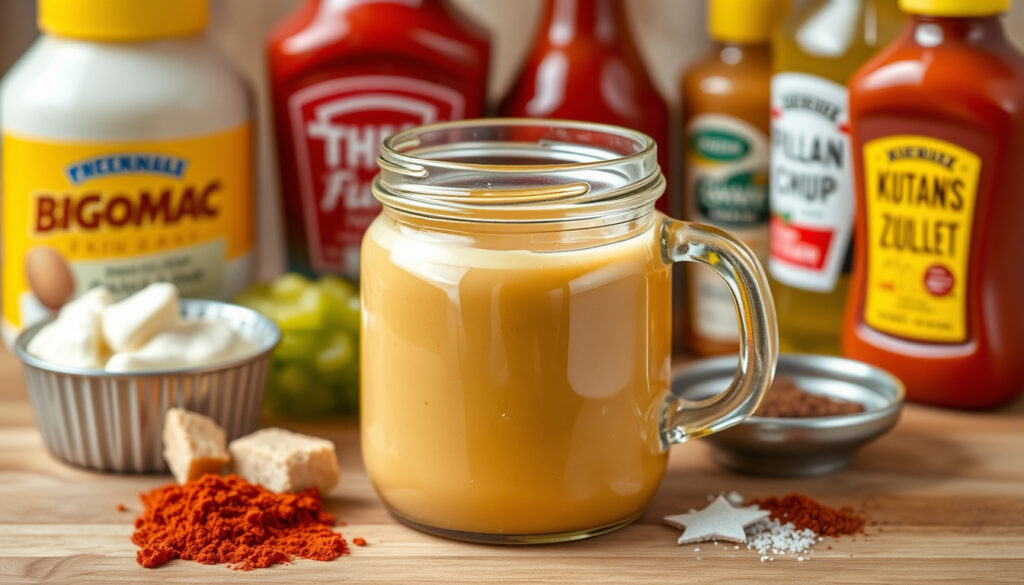
Big Mac Sauce – Copycat Recipe and Ingredients Guide
Big Mac sauce is the signature condiment that defines one of the world’s most recognizable sandwiches. This creamy, tangy spread coats both buns of the Big Mac, creating the flavor profile that has made the sandwich a cultural icon since 1968.
While McDonald’s maintains strict secrecy around the exact recipe, food enthusiasts and recipe developers have spent decades analyzing and reverse-engineering the sauce’s distinctive taste. The result is a collection of copycat recipes that come remarkably close to the original.
Understanding what goes into Big Mac sauce matters whether you’re trying to replicate it at home, curious about its nutritional profile, or simply want to know exactly what you’re spreading on your burger. This guide covers the ingredients, preparation methods, and where this beloved condiment originated.
What Is Big Mac Sauce Made Of?
Sweet pickle relish paired with a creamy mayonnaise base
Created for the McDonald’s Big Mac in 1968
Sold seasonally in select locations and online
Approximately 90 per serving
- The sauce combines mayonnaise with sweet pickle relish as its foundation
- Yellow or ground mustard provides sharpness and tang
- Paprika and turmeric together create the sauce’s signature color
- Garlic powder and onion powder add savory depth
- White vinegar balances the creaminess with acidity
- McDonald’s keeps the exact recipe confidential
| Fact | Details |
|---|---|
| Creator | McDonald’s Corporation |
| Menu Debut | 1968 with the Big Mac sandwich |
| Base Components | Mayonnaise and sweet pickle relish |
| Recipe Status | Proprietary and undisclosed |
| Yield | Approximately 1 cup per batch |
| Shelf Life | Up to 1 week refrigerated |
Big Mac Sauce Recipe: How to Make It at Home
Step-by-Step Preparation
Most copycat recipes follow a straightforward process. Combine all ingredients in a bowl and mix until smooth. Some chefs recommend letting the mixture rest for about 10 minutes to allow the flavors to meld together properly before using.
The sauce works best when served at room temperature, though it can be used directly from the refrigerator. Home cooks report that the flavor actually improves after 24 hours of refrigeration. AllRecipes offers a popular version that demonstrates this technique.
Grating onion instead of mincing it produces a superior texture. The finer particles dissolve more evenly into the sauce, creating a smoother consistency that better mimics the original.
Storage and Shelf Life
Homemade Big Mac sauce keeps well when stored properly. Transfer the mixture to an airtight container and refrigerate for up to one week. The sauce may darken slightly over time as the spices settle, but this does not affect taste or quality.
A lighter version using Greek yogurt instead of mayonnaise contains approximately 22 calories per serving, according to testing by food bloggers who specialize in healthier recreations of popular dishes.
Can You Buy Big Mac Sauce?
McDonald’s has sold bottles of Big Mac sauce in certain markets during limited promotional periods. These bottle releases typically occur around the anniversary of the Big Mac’s launch or during special marketing campaigns. The company has offered these products as collectible items for fans of the brand.
The availability varies significantly by region and season. Some collectors and fans purchase these bottles when they appear, making them somewhat rare items for merchandise enthusiasts.
For most consumers, the practical option is to make the sauce at home using one of the established copycat recipes. The ingredients are widely available at any grocery store, and the preparation requires no special equipment.
Is Big Mac Sauce the Same as Thousand Island Dressing?
Big Mac sauce and Thousand Island dressing share similarities but are not identical. Both are creamy condiments built on mayonnaise bases that include sweet pickle relish and mustard. This common foundation explains why many people perceive them as similar.
The key differences lie in the spice profile and sweetness levels. Big Mac sauce tends to be sweeter and includes specific seasonings that create its recognizable flavor profile. Thousand Island traditionally relies more heavily on ketchup for its color and sweetness.
Food scientists and flavor analysts note that the signature orange-brown hue of Big Mac sauce comes from paprika and turmeric rather than ketchup or tomato paste, which many people assume provides the color. This distinction is important for anyone attempting to replicate the exact appearance. Serious Eats has documented detailed testing that confirms these findings.
The History Behind Big Mac Sauce
- : McDonald’s began developing the sauce formula as part of the Big Mac concept
- : The Big Mac launched nationally, introducing the sauce to millions of customers
- : Bottled versions of the sauce appeared in select markets during promotional periods
What We Know and What Remains Unclear
| Established Information | Remaining Uncertainties |
|---|---|
| The sauce contains mayonnaise, sweet pickle relish, and mustard as core ingredients | The exact McDonald’s recipe has never been officially released |
| Paprika and turmeric create the signature color, not ketchup | Precise ingredient ratios are proprietary information |
| The sauce debuted with the Big Mac in 1968 | Whether the recipe has been modified over the decades is unknown |
| Copycat recipes approximate the flavor closely | Official nutritional data from McDonald’s is not publicly available |
The Cultural Impact of McDonald’s Signature Sauce
Big Mac sauce represents more than just a condiment. It has become a symbol of American fast food culture and a benchmark for burger enthusiasts worldwide. The sauce’s distinctive taste has inspired countless homemade versions and appears in numerous recipe collections focused on copycat restaurant dishes.
The secrecy surrounding the exact recipe has only increased consumer fascination. This phenomenon mirrors broader trends in food culture where proprietary formulas like those for Coca-Cola become part of cultural mythology. Wikipedia documents the Big Mac’s cultural significance as part of the broader story of fast food innovation.
The sauce also demonstrates how simple ingredients can combine to create something greater than the sum of their parts. The balance of creamy, tangy, sweet, and savory elements showcases fundamental principles of flavor building that home cooks can apply to their own creations.
Sources and Expert Insights
“While McDonald’s keeps the exact recipe under wraps, multiple copycat recipes have been developed based on testing and research.”
— Food bloggers and recipe developers specializing in copycat restaurant sauces
Recipe testers and food scientists have analyzed the sauce’s characteristics extensively. Food Network provides additional perspective on how these recreation attempts have evolved over time, documenting their methods and findings.
In Summary
Big Mac sauce remains one of the most recognizable condiments in the fast food industry. While McDonald’s keeps the official recipe confidential, copycat versions using common supermarket ingredients come remarkably close to the original flavor. Whether you purchase it during a limited promotional release or make it at home, the sauce continues to define the Big Mac experience for millions of customers worldwide.
Frequently Asked Questions
How many calories are in Big Mac sauce?
Precise calorie counts vary by recipe. A standard copycat version using mayonnaise contains approximately 90 calories per serving. A lighter version substituting Greek yogurt for mayonnaise contains roughly 22 calories per serving.
When was Big Mac sauce created?
Big Mac sauce was developed in 1967 as part of the original Big Mac concept and launched commercially in 1968 alongside the sandwich itself.
What gives Big Mac sauce its color?
Paprika and turmeric together create the sauce’s signature orange-brown color. Many people assume ketchup or tomato paste provides this hue, but testing confirms spices are responsible.
Can I buy Big Mac sauce in stores?
McDonald’s has released bottled versions during promotional periods, but these are limited offerings that vary by region and season. They are not permanent retail products.
How long does homemade Big Mac sauce last?
When stored in an airtight container in the refrigerator, homemade Big Mac sauce remains fresh for up to one week.
What is the difference between Big Mac sauce and Thousand Island?
While both sauces share mayonnaise and sweet pickle relish as base ingredients, Big Mac sauce is typically sweeter and contains specific spices like paprika and garlic powder that distinguish its flavor profile from Thousand Island dressing.
Is Big Mac sauce the same as special sauce?
Big Mac sauce is the specific type of special sauce used on Big Mac sandwiches. The term “special sauce” sometimes refers to other restaurant sauces with unique flavor profiles.
More related posts
 Katharine Ross: Movies, Net Worth, and Sam Elliott
 Steve Mortimer: Health, Family, and Rugby League Legacy
 David Fincher Movies: Best Films, Full Filmography
 Garmin Venu 3 – Battery Life, Specs and Accuracy Tested
 Oyster Farmers: What They Do and How to Start
 One Battle After Another Reviews – Critic Consensus and Key Insights
 Shovel Nose Shark – Complete Species Guide
 Translate English to Korean: Best Tools & Phrases Guide
